Visa embedded its global payment network into OpenAI's platforms at the Visa Payments Forum on June 10, 2026. AI agents in ChatGPT will be able to shop and complete transactions within user-set spending limits.

ChatGPT Can Now Shop for You: OpenAI and Visa Launch Agentic Commerce

NEW DELHI, June 12, 2026

Visa and OpenAI announced a strategic payments partnership on June 10, 2026, at the Visa Payments Forum in San Francisco, embedding Visa's global payment network directly into OpenAI's products and platforms so AI agents inside ChatGPT can shop and complete transactions on behalf of users.

The deal marks a pivotal shift in how AI models interact with commerce. Rather than simply surfacing product recommendations, ChatGPT agents will be able to research items, compare prices, and initiate secure purchases within user-defined spending limits, merchant restrictions, and approval requirements. For the payments industry, the partnership signals that agentic commerce is no longer a future concept: the world's two largest companies in AI and card payments are building its infrastructure now. 

What the Visa-OpenAI Deal Actually Does

At its core, the partnership integrates Visa's Intelligent Commerce Connect platform into OpenAI's agent infrastructure. Visa supplies the trust layer: limited-use payment tokens, real-time authorization, fraud monitoring, and chargeback handling. OpenAI provides the intelligence layer: the AI agents that interpret instructions, search products, and initiate the payment request.

Jack Forestell, Chief Product and Strategy Officer at Visa, framed the ambition plainly at the forum: AI will reshape commerce more profoundly than the internet or mobile ever did, and Visa's job is to make every agent-initiated transaction trusted, secure, and seamless.
Marco Mahrus, OpenAI's Head of Partnerships for Commerce, described the integration as the infrastructure layer for user-controlled agentic transactions, noting that people can do more with AI agents while maintaining confidence that payments are being handled safely.

The practical workflow: a user tells ChatGPT to find wireless headphones under $150. The agent searches, compares options, presents a recommendation, and can initiate the purchase using a Visa-issued token, all within the guardrails the user has set in advance. No manual checkout. No re-entering card details.

Why This Is Different From OpenAI's Previous Commerce Attempts

OpenAI has tried to crack in-chat commerce before. The company launched Instant Checkout in late 2025, a native checkout experience inside ChatGPT. It struggled. Fewer than a dozen merchants integrated the feature, and an unresolved compliance gap around US state sales tax collection forced OpenAI to quietly discontinue it in March 2026.

The Visa partnership takes a different approach. Instead of building a walled checkout product, OpenAI is connecting to existing financial infrastructure. Visa's Intelligent Commerce Connect platform supports multiple agent protocols: the Trusted Agent Protocol, Machine Payments Protocol, Agentic Commerce Protocol (ACP), and Universal Commerce Protocol. Stripe underpins ACP, meaning established payment processors keep a role even where Visa's network sits above them.

Verma notes: This is a smarter architecture. OpenAI tried to own the checkout and hit a wall. By partnering with Visa's rail instead, ChatGPT agents tap into infrastructure that already has issuer relationships, fraud frameworks, and merchant trust. The outcome for users is lower friction; the outcome for Visa is a distribution channel of 700 million ChatGPT users.

Beyond Retail Shopping: What Else Can Agents Buy?

The announcement goes well beyond consumer shopping. OpenAI's Codex coding agents could use authenticated payment credentials to purchase additional compute, APIs, or developer services autonomously within user-defined limits. The partnership also covers enterprise applications and automated conversational workflows.

Visa's Rubail Birwadker, the company's global head of growth, told Axios that more than one in five transactions are already being influenced by what users are learning through large language models, and that AI is shaping buying decisions faster than Visa had expected. He said the agent-payment experience could eventually feel similar to Apple Pay or Shop Pay.

The scope as disclosed covers three main use cases:

•        Consumer shopping: product discovery, price comparison, and purchase initiation within ChatGPT.
•        Business payments: invoice handling and B2B transaction automation via AI agents.
•        Developer and enterprise workflows: AI coding agents purchasing compute, APIs, or SaaS services without human checkout steps. 

How User Safeguards Work

The partnership is built around user-defined controls. Before any agent can spend, the user sets the parameters:

•        Spending cap: a maximum per transaction or per period.
•        Merchant restrictions: categories of stores the agent is and is not allowed to purchase from.
•        Approval requirements: whether a purchase above a certain threshold requires explicit user confirmation before proceeding.

On the infrastructure side, Visa applies tokenized credentials so the agent never holds a reusable card number. Real-time fraud monitoring runs throughout. Chargebacks and refunds follow standard Visa network rules, giving users the same protections they have on any Visa card purchase today.

Who Else Is in the Agentic Commerce Race?

The Visa-OpenAI partnership reflects how quickly the industry is consolidating. Large technology and financial networks are moving first, unlike previous payment innovation cycles where fintechs set standards before incumbents followed.

Visa's Intelligent Commerce initiative already lists Microsoft, IBM, Anthropic, Samsung, and Stripe as partners alongside OpenAI. Google has developed its own Universal Commerce Protocol with a separate coalition. Mastercard is building parallel AI-enabled payment solutions.

PayPal joined the OpenAI commerce ecosystem in late 2025, adopting ACP to let users pay inside ChatGPT. Perplexity enabled PayPal checkout in May 2025. The pattern is clear: every major AI platform and payment network is racing to claim a position in the transaction stack before norms are set.

For AI practitioners, this matters because the tools you prompt will soon have the ability to spend money. Understanding how to structure agentic prompts with proper financial constraints will become a core skill. Our guide to

For a deeper look at structuring agent instructions, see our guide on agentic prompting.

What Prompts Will Power AI Shopping Agents?

For users who want to direct ChatGPT's new shopping capabilities, how you frame the instruction matters. Here are examples of what works and what does not. 

BAD PROMPT

Buy me some headphones.

Why it fails: No budget, no brand preference, no merchant restrictions, and no approval step. The agent has no guardrails and will either ask multiple follow-up questions or pick arbitrarily.

GOOD PROMPT

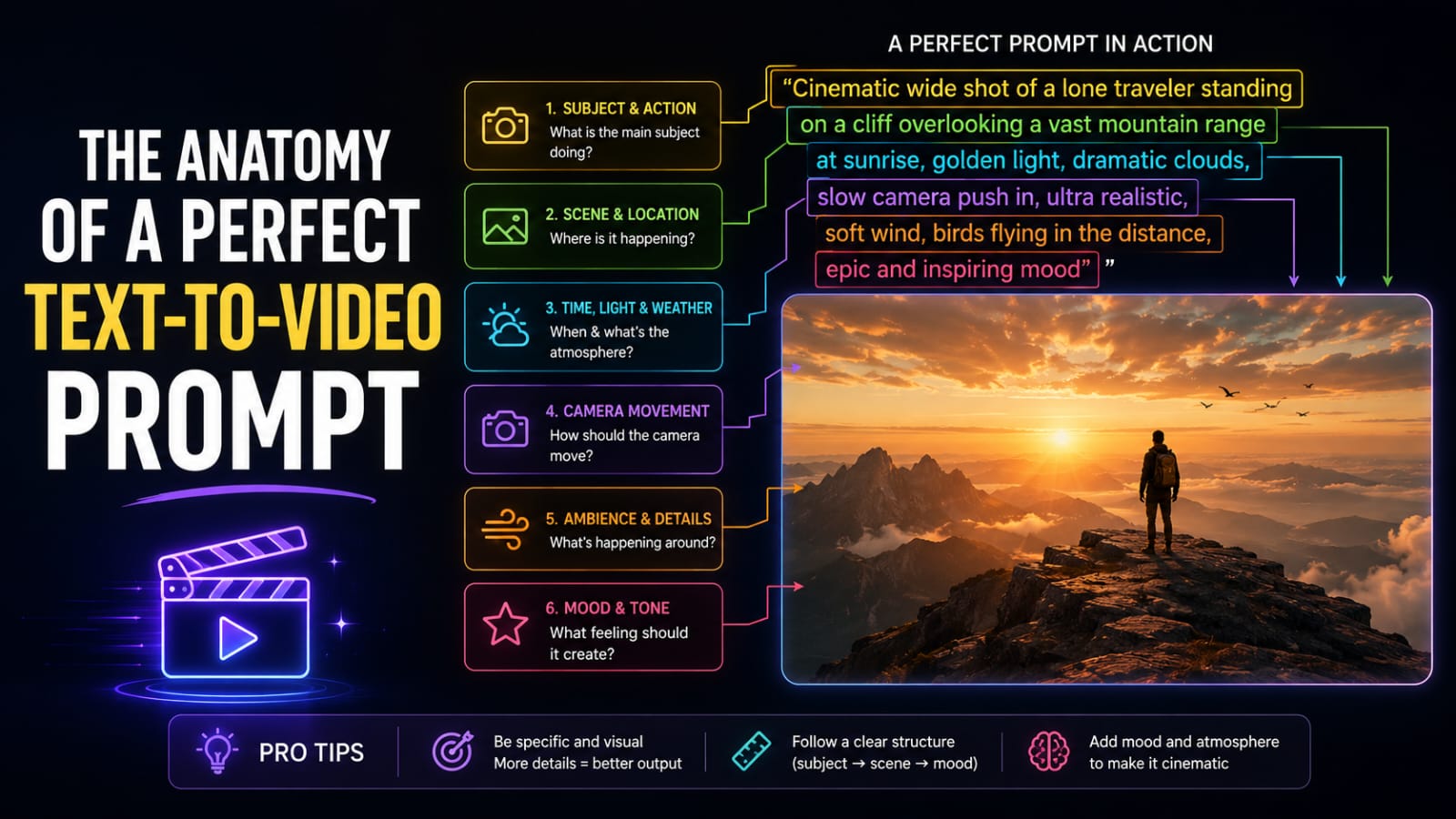
You are my shopping agent. Find wireless over-ear headphones with active noise cancellation under $120. Prioritize options on Amazon or Best Buy with at least 4-star ratings and next-day delivery. Show me the top 3 options in a comparison table, then ask for my confirmation before initiating any purchase. Do not spend more than $130 including tax and shipping.

Why it works: Specifies role, budget ceiling, merchant restrictions, delivery requirement, rating filter, output format (comparison table), and requires explicit approval before any transaction. The agent has clear guardrails and a defined decision path.

For more on structuring instructions like these, see Best ChatGPT Prompts 2026

Key Takeaways

•        Visa and OpenAI announced their agentic commerce partnership on June 10, 2026, at the Visa Payments Forum in San Francisco.
•        AI agents inside ChatGPT will be able to complete purchases using Visa's tokenized payment infrastructure, within user-set spending limits and merchant restrictions.
•        The deal is broader than retail shopping: it covers enterprise workflows, B2B payments, and developer agents buying compute or APIs.
•        OpenAI's earlier Instant Checkout feature was discontinued in March 2026 after fewer than a dozen merchants adopted it; the Visa partnership takes a different infrastructure-layer approach.
•        Mastercard, Google, and PayPal are building parallel agentic payment frameworks, making 2026 the year the major players stake their positions in AI-driven commerce.
•        Users should learn how to write constrained agentic prompts now, as spending guardrails will become essential when AI agents gain real payment credentials.

Frequently Asked Questions

Can ChatGPT make purchases on my behalf right now?

Not yet in a live product form. The Visa-OpenAI partnership announced on June 10, 2026, is infrastructure-level plumbing. OpenAI and Visa have not disclosed a consumer launch date, interface design, or pricing. A first live approval-screen design is described as a forthcoming test, not an active feature.

How does Visa prevent fraud when an AI agent pays for something?

Visa applies its standard fraud monitoring to every transaction, alongside tokenized credentials that replace a real card number with a limited-use token. Users can also set spending caps, merchant category restrictions, and approval requirements, so any purchase outside those parameters requires explicit human confirmation before proceeding.

What happened to ChatGPT's Instant Checkout feature?

OpenAI launched Instant Checkout in late 2025 to let users buy products directly inside ChatGPT. The feature was discontinued in March 2026 after fewer than a dozen merchants integrated it and an unresolved US state sales tax compliance issue remained unsolved. The Visa partnership is the follow-on strategy.

What is agentic commerce?

Agentic commerce refers to a model in which AI agents, rather than human users manually browsing and clicking, handle product discovery, price comparison, and payment initiation. The agent acts on instructions and constraints set by the user, completing tasks end-to-end, including checkout, without requiring manual input at each step.

Is Mastercard also building AI payment technology?

Yes. Mastercard is developing its own AI-enabled payment solutions in parallel, according to reports from June 2026. Google is building a Universal Commerce Protocol backed by a separate partner coalition. The major payment networks are treating agentic commerce as the next strategic frontier.

Which AI platforms support agentic payments today?

As of June 2026, OpenAI via ChatGPT and Perplexity have announced active commerce partnerships (with Visa, PayPal, and others). Most implementations are still in development or limited pilots. Developers can connect to Visa's Intelligent Commerce Connect platform, which also lists Microsoft, IBM, Anthropic, Samsung, and Stripe as partners.

References  

  1.     Visa Partners With OpenAI to Embed Payment Infrastructure Across Agentic Commerce - PaySpace Magazine

  2.   Visa, OpenAI bring agentic commerce to ChatGPT - Axios

  3.   Visa plugs its payment network into ChatGPT - Audacy/WBEN

  4.   Visa partners with OpenAI to let AI agents make payments for users - SiliconANGLE

  5.   OpenAI and Visa Plan Payments for AI Shopping Agents - WinBuzzer

  6.   PayPal partners with OpenAI to let users pay for their shopping within ChatGPT - TechCrunch

Related Articles

Best ChatGPT Prompts 2026: 200+ With Real Examples

The Guide to Agentic Prompts

ChatGPT vs Claude: Full Comparison

How to Build AI Workflows Without Code

OpenAIVisaChatGPTagentic commerceAI paymentsVisa Intelligent Commerceagentic paymentsfintech
Swatantra Verma

Written by Swatantra Verma

Founder & Head of Research

Focused on AI prompt research, content strategy, and building productivity-driven learning resources to help users write better prompts and work smarter with AI.

Follow Author