

Top 5 AI News: May 30, 2026 - The Week That Changed Everything
Five years ago, a $1 billion AI funding round was headline news for a week. This week, Anthropic closed a round worth thirty times that — and it was one of five stories fighting for the front page. That tells you everything about where we are in 2026.
I read through every major AI development from the last seven days so you don't have to. Below are the five stories that will actually matter for your work, your prompting strategy, and your understanding of where this industry is heading.
Story 1: Anthropic Closes $30B Round at $900B+ Valuation — Surpassing OpenAI
Anthropic officially closed a funding round worth over $30 billion at a pre-money valuation above $900 billion, making it the world's most valuable private AI company — for the first time surpassing rival OpenAI.
The round was co-led by Sequoia Capital, Dragoneer Investment Group, Altimeter Capital, and Greenoaks Capital Partners, with each firm contributing approximately $2 billion. Peter Thiel's Founders Fund, General Catalyst, Microsoft, and NVIDIA also participated. The deal came together in weeks, not months — a signal of how aggressively institutional capital is chasing AI infrastructure plays right now.
Here is the number that I think people are underreacting to: Anthropic's annualized revenue run rate now exceeds $30 billion, up from $9 billion at the end of 2025. That is not gradual growth. That is a company that tripled its revenue in under five months. The primary drivers are Claude Code becoming the dominant enterprise agentic coding tool, Claude Opus 4.7 surpassing GPT-5.4 on key coding and reasoning benchmarks in April 2026, and major enterprise deals with PwC and Blackstone.
My honest take: this is a legitimate business valuation, not a hype cycle. Anthropic projected $10.9 billion in Q2 2026 revenue and its first quarterly operating profit ever. Investors are not hoping for a path to $50B+ annual revenue — they are pricing one in.
The caveat that nobody wants to talk about? Anthropic is spending approximately $15 billion annually on compute from SpaceX alone, with additional commitments to AWS, Google Cloud, and Akamai on top. Profitability at scale requires either continued revenue growth at current rates or a dramatic drop in compute costs as next-generation GPU infrastructure comes online. Both could happen. Neither is guaranteed.
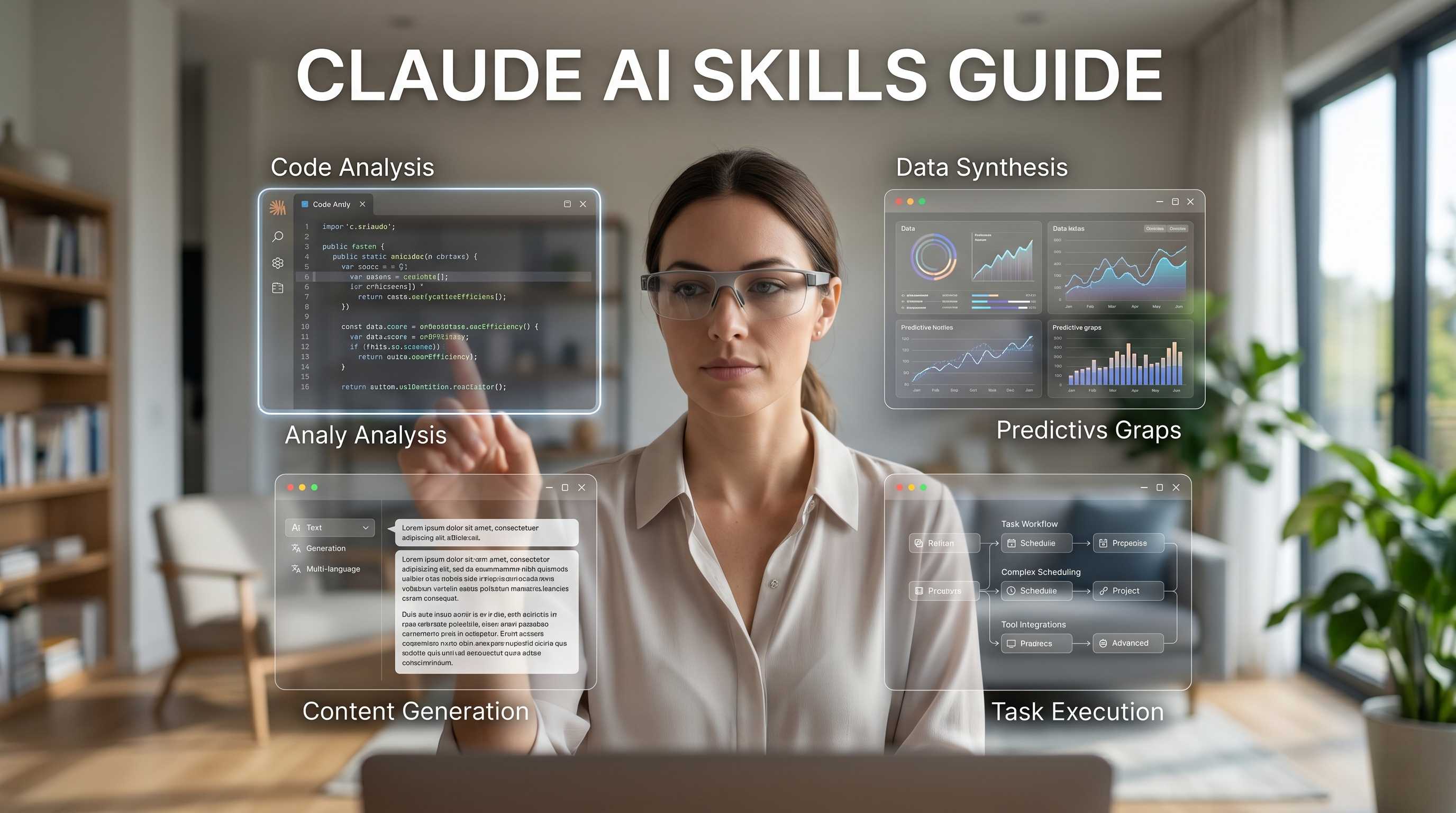
What this means for your prompting practice: Anthropic's enterprise push means Claude will keep improving on multi-step agentic tasks. If you are not yet using Claude for workflow automation, now is the time to build those skills.
Example 1 — Valuation Analysis Prompt
You are a senior business analyst. Anthropic just raised $30 billion at a $900B valuation in May 2026.
Analyze the three biggest strategic risks to this valuation over the next 18 months.
For each risk: name it clearly, explain the mechanism, assign a probability (low/medium/high),
and suggest one hedge strategy an Anthropic executive could pursue.
Format your response as a numbered list with subheadings.
Example 2 — Investor Memo Prompt
You are a venture capital partner preparing a memo for your LPs.
Explain the Anthropic May 2026 funding round in simple terms — what was raised, who led it,
what the valuation means in context of OpenAI's $852B March valuation,
and what the compute cost challenges mean for long-term profitability.
Write at a level appropriate for a sophisticated investor who is not a daily AI reader.
Keep it under 400 words.
Story 2: OpenAI Files Confidential IPO S-1 — Targeting a $1 Trillion Valuation
OpenAI confidentially filed its S-1 IPO prospectus with the SEC on May 22, 2026, targeting a Q4 2026 public listing — possibly as early as September — at a valuation between $852 billion and $1 trillion.
Goldman Sachs and Morgan Stanley are leading the deal. OpenAI is generating approximately $2 billion per month in revenue, hit a $25 billion annualized run rate by March 2026, and counts 50 million consumer subscribers plus 9 million business users.
The part analysts are quietly wrestling with: OpenAI is losing $1.22 for every $1 of revenue it earns. The company is not expected to reach profitability until around 2030, with internal projections showing losses of $14 billion in 2026 alone. That math works in a bull market. It works less well if macro sentiment turns.
I will say the quiet part loud: OpenAI filing before Anthropic is a deliberate sequencing move, not just a business decision. Whoever lands the first frontier-AI IPO sets the comparable for the entire sector. Anthropic has also telegraphed an October 2026 IPO at a valuation above $900 billion. Two of the world's most valuable AI companies going public within months of each other is genuinely unprecedented.
Example 1 — IPO Analysis Prompt
Act as a Wall Street equity analyst covering the AI sector.
OpenAI is targeting a September 2026 IPO at a $852B-$1T valuation.
The company generates $2B/month in revenue but loses $1.22 for every $1 earned.
Write a 250-word investment thesis covering: revenue growth trajectory, key risks (compute costs,
Microsoft dependency, competition from Anthropic and Google), and a fair value range.
Be specific with numbers. Do not hedge every sentence.
For a deeper comparison of how OpenAI's current models stack up against Claude and Gemini, check out ChatGPT vs Claude: Full Comparison.
Story 3: Google Gemini 3.5 Flash Outperforms Its Own Pro Model — What This Means
Google broke one of its own rules at Google I/O 2026: the cheap, fast Flash tier of Gemini 3.5 now outperforms the previous flagship Pro model on coding and agentic benchmarks.
Gemini 3.5 Flash — launched May 19, 2026 — scores 76.2% on Terminal-Bench 2.1 (coding), 1656 Elo on GDPval-AA (real-world agentic task performance), and 84.2% on CharXiv Reasoning (multimodal understanding). It runs 4x faster than comparable frontier models at less than the cost of Gemini 3.1 Pro. Pricing is $1.50 per million input tokens. The more capable Gemini 3.5 Pro is expected next month.
Google also unveiled Gemini Spark — a personal AI agent that runs 24/7 on Google Cloud virtual machines even when your laptop is closed, capable of working autonomously across Google Workspace, third-party apps, and the web. Spark operates in the background and requires approval before high-stakes actions.
My contrarian take: Google making Gemini unavoidable across all its surfaces — Search, Gmail, YouTube, Android, Docs, Workspace — is actually a bigger story than the raw benchmark numbers. OpenAI and Anthropic have to fight for distribution. Google already owns the surfaces where 3 billion people spend their day.
If you are building with the Gemini API or using the Gemini app, see our Best Gemini AI Prompts 2026 guide for copy-paste-ready templates.
Example 1 — Model Selection Prompt
You are a developer evaluating Gemini 3.5 Flash for an enterprise agentic coding workflow.
The model scores 76.2% on Terminal-Bench 2.1 and costs $1.50 per million input tokens.
For each use case — code review, documentation generation, multi-step API orchestration —
recommend which model to use and why.
Structure as a three-column comparison table.
Example 2 — Gemini Spark Workflow Prompt
You are a product manager at a SaaS company.
Google's Gemini Spark agent can now run autonomously in the background,
taking actions across Workspace and third-party apps without the user having the app open.
Identify the three highest-value workflows to automate with Gemini Spark for a 50-person sales team.
For each workflow: describe the trigger, the actions taken, the approval gate, and the expected time saved per week.
Story 4: AI Beats the Average Human on Creativity Tests — What the Study Actually Found
A landmark study of more than 100,000 people, published in Scientific Reports in January 2026, found that AI models like GPT-4 now outperform the average human on specific creativity tests. But the headline misses the more interesting finding.
The research was led by Professor Karim Jerbi at the Universite de Montreal, with participation from deep learning pioneer Yoshua Bengio (founder of Mila and LoiZero) and researchers from Concordia, University of Toronto Mississauga, and Google DeepMind. The study used the Divergent Association Task — participants generate ten words as semantically unrelated to each other as possible, scored by measuring the semantic distance between meanings.
On that measure, yes — advanced AI models now exceed average human performance. Models tested included ChatGPT, Claude, and Gemini. But here is what the news coverage is glossing over: the most creative humans, particularly the top 10%, still outperform every AI model tested by a wide margin, especially on richer tasks like poetry, storytelling, and haiku composition.
The practical implication for prompt engineers is significant: you can engineer higher AI creativity, not just accept the default. The study found that AI creativity levels varied significantly with model temperature settings and prompt design. Instructions that encouraged etymological or structural thinking led to measurably more original outputs.
This study also matters for a subtler reason. If AI already beats average humans at idea generation on well-defined tasks, the skill that remains distinctly human is not generating options — it is deciding which option deserves to survive. Judgment, editorial instinct, and rejection are the defensible parts of creative work now.
Learn how to build structural and role-based prompts that maximize creative output at What is Prompt Engineering?
Example 1 — Divergent Thinking Prompt
You are a creative director tasked with generating campaign concepts for [Brand].
Approach this brief from three completely unrelated fields simultaneously:
(1) molecular biology, (2) 18th-century Japanese woodblock printing, and (3) game theory.
For each field: extract one structural principle, then apply it to the brand challenge.
After generating three divergent concepts, synthesize the strongest single direction from all three.
Example 2 — Semantic Distance Prompt
Act as a writing coach with expertise in divergent thinking.
I will give you a creative brief. Generate 10 responses that are as semantically
distant from each other as possible — each exploring a completely different conceptual territory.
Avoid the obvious first five answers any average person would give.
For each response, name the conceptual territory it belongs to.
Story 5: California Passes 30 AI Bills in One Week — US AI Regulation Is Accelerating
California's AI legislative push is now the fastest-moving regulatory story in the United States. Nearly all of the state's 30 active AI-related bills cleared their chamber of origin before the May 29 crossover deadline, setting up a packed four-week stretch before the July 2 summer adjournment.
Significant bills moving through include AB 1609 on customer service chatbots (approved by the full Assembly on May 27), AB 1651 on AI use in the State Bar exam (passed 68-0 by the Assembly in April), and AB 1159 extending student privacy protections to AI-driven educational platforms. Meanwhile, California Governor Gavin Newsom signed an Executive Order on May 21, 2026 directing state agencies to prepare workers, small businesses, and communities for economic disruption caused by AI.
This is happening against a federal backdrop that has moved in the opposite direction. The White House issued a National Policy Framework for AI urging Congress to preempt certain state laws to avoid stifling innovation. California is not backing down.
The story is bigger than California. According to the Transparency Coalition's May 29 legislative update, Louisiana is finalizing three AI bills, Illinois has nine bills still moving toward passage, and Arizona lawmakers return from budget talks with three AI bills still in play. Seventy-eight chatbot bills are alive in 27 states.
For businesses using AI-generated customer interactions, AI-assisted legal workflows, or AI tools in any educational context: the compliance clock is running. The California AI Transparency Act (AB 853) takes effect in August 2026. I do not think most AI professionals take regulation seriously until it directly hits their workflow. That is a mistake.
Example 1 — AI Compliance Review Prompt
You are an AI compliance attorney specializing in California AI law.
A SaaS company uses AI-generated customer service chatbots and an AI-assisted sales workflow.
Review the following California laws and tell me which apply, what disclosures are required,
and the key compliance deadlines:
- AB 1609 (customer service chatbots)
- AB 853 (California AI Transparency Act, effective August 2026)
- SB 53 (Transparency in Frontier AI Act, effective January 2026)
For each: state whether it applies, what the company must do, and the deadline.
Example 2 — Regulatory Strategy Prompt
Act as a policy strategist advising a mid-size AI startup operating in California.
Governor Newsom's May 21 Executive Order focuses on preparing workers for AI-driven economic disruption.
Identify three proactive actions the company can take in the next 90 days to reduce regulatory risk,
demonstrate good faith to California regulators, and position the company favorably
if AI labor-related legislation passes in 2026.
Be specific — name the action, the timeline, and the business benefit.
Recommended Blogs
If you found this useful, these posts go deeper on related topics:
• Best Claude AI Prompts 2026: 25+ Types With Examples
• Best ChatGPT Prompts 2026: 200+ With Real Examples
• Best Gemini AI Prompts 2026: 100+ Templates With Examples
• ChatGPT vs Claude: Full Comparison
• The Guide to Agentic Prompts
Frequently Asked Questions
What is the biggest AI news story this week in May 2026?
The biggest story is Anthropic closing a funding round worth over $30 billion at a pre-money valuation above $900 billion — making it the world's most valuable private AI startup, surpassing OpenAI's $852 billion March 2026 valuation. The round was co-led by Sequoia Capital, Dragoneer, Altimeter Capital, and Greenoaks Capital Partners.
Did OpenAI file for an IPO in 2026?
Yes. OpenAI confidentially filed its S-1 IPO prospectus with the SEC on May 22, 2026. Goldman Sachs and Morgan Stanley are leading the deal. The company is targeting a Q4 2026 public listing, possibly as early as September, at a valuation between $852 billion and $1 trillion. OpenAI generates approximately $2 billion per month in revenue but remains unprofitable, with estimated losses of $14 billion in 2026.
What is Gemini 3.5 Flash and how is it different from Gemini 3.1 Pro?
Gemini 3.5 Flash, launched May 19, 2026 at Google I/O, is Google's latest AI model — and the Flash (cheap/fast) tier now outperforms the previous flagship Pro model on coding and agentic benchmarks. It runs 4x faster, scores 76.2% on Terminal-Bench 2.1, and costs $1.50 per million input tokens. Gemini 3.5 Pro is expected to launch next month.
Can AI really beat humans at creativity?
According to a January 2026 study in Scientific Reports led by Professor Karim Jerbi (Universite de Montreal), with participation from Yoshua Bengio and Google DeepMind, AI models including GPT-4 now outperform the average human on specific divergent creativity tasks tested across 100,000+ participants. However, the top 10% most creative humans still significantly outperform every AI model tested — especially on richer tasks like poetry and storytelling.
What new California AI laws are coming in 2026?
California has approximately 30 AI-related bills advancing through the legislature after the May 29 crossover deadline. The California AI Transparency Act (AB 853) takes effect in August 2026. AB 1609 on customer service chatbots passed the full Assembly on May 27. Governor Newsom signed an Executive Order on May 21, 2026 directing state agencies to prepare for AI-driven economic disruption.
Why is Anthropic's $900 billion valuation significant?
It represents the largest private AI company valuation in history and marks the first time Anthropic has surpassed OpenAI in private market valuation. Anthropic's annualized revenue run rate exceeded $30 billion as of May 2026, up from $9 billion at the end of 2025. The valuation reverses a dramatic shift from February 2026, when Anthropic was valued at $380 billion.
How should I use AI tools to stay current with AI news?
The most effective approach is to combine web-enabled AI models with structured prompting. Browse our Prompt Library for ready-made research and analysis prompt templates.
Follow along on promptailearning.com for weekly guides on prompting, AI tools, and getting more out of every model.
References
2. CNBC — Anthropic No. 1 on 2026 Disruptor 50 List
3. RoboRhythms — OpenAI Just Filed for IPO: The 2026 Math Is Brutal
4. MarkTechPost — Google Introduces Gemini 3.5 Flash at I/O 2026
6. Transparency Coalition — AI Legislative Update May 29, 2026
7. Governor of California — Newsom Executive Order on AI Workforce Disruption, May 21, 2026