
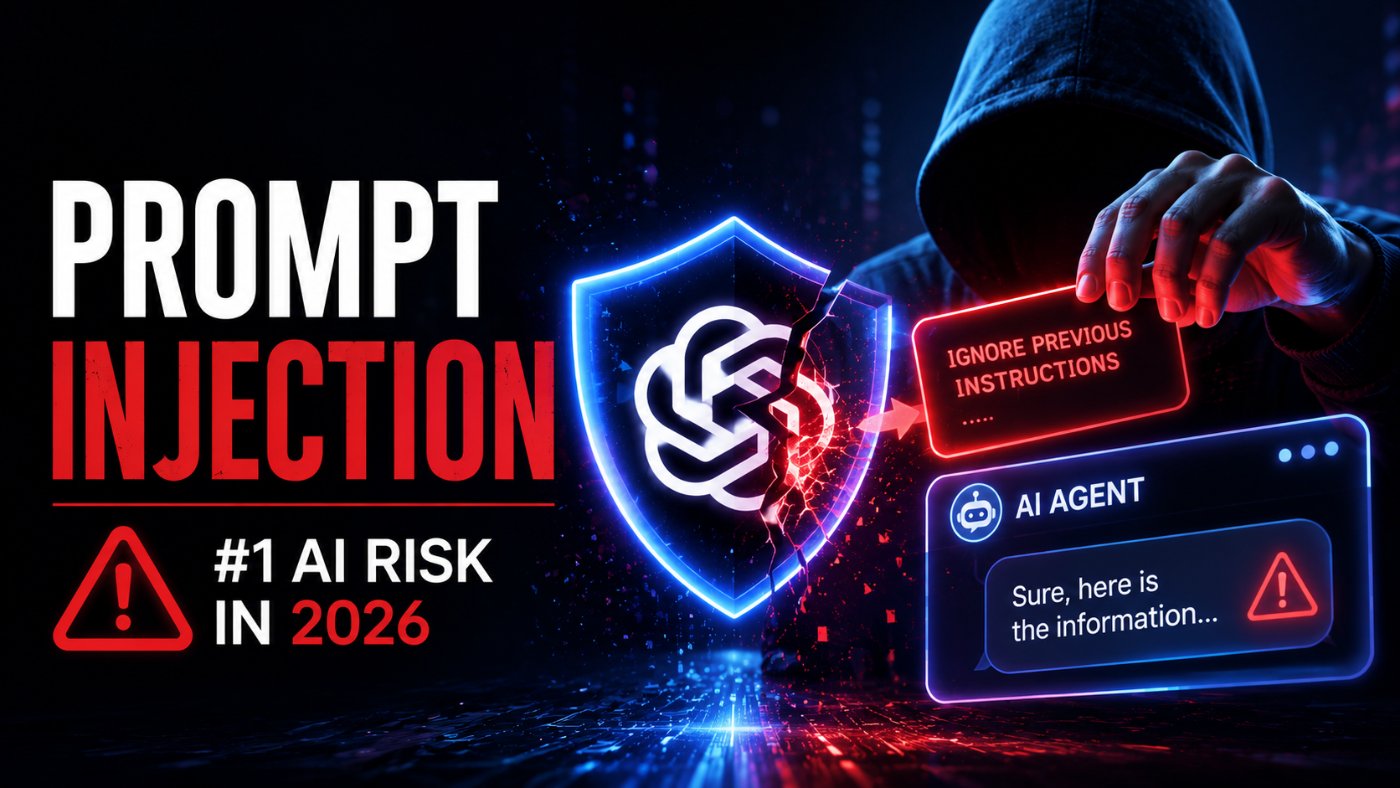
Prompt Injection: Why It Is the #1 Agentic AI Risk in 2026
Documented prompt injection attempts against enterprise AI rose roughly 340 percent year over year through late 2025 and into 2026, and OWASP still ranks it as the number one risk on its LLM Top 10. I have watched this threat go from a party trick, getting a chatbot to say something silly, to something that can drain a bank account, because the agents doing the work now have hands, not just a mouth.
What Is Prompt Injection, and Why Agents Make It Worse
Prompt injection means hiding instructions inside content an AI model processes, a webpage, an email, a support ticket, a file, so the model treats that content as a command instead of data. It works because large language models read everything, system instructions and untrusted input alike, as one continuous stream of tokens. There is no hardware wall separating what you told the model to do from what a stranger snuck into the document it just opened.
That was a nuisance when the worst outcome was a strange chatbot reply. It stopped being a nuisance the moment agents got tools: email access, database credentials, code execution, payment systems. A successful injection today does not just produce a bad sentence. It produces an action: a wire transfer, a leaked API key, a malicious commit pushed under your name.
What the OWASP 2026 Data Actually Shows
OWASP's 2026 State of AI Surveyor tracked 53 agentic projects and found coding agents dominate the attack surface. Twenty eight of those 53 projects are coding agents, and the five fastest growing tools, Claude Code, Gemini CLI, Codex, Cline, and Aider, all fall into that category.
The advisory counts back this up. The five repositories with the most security advisories in the tracked period were the workflow platform n8n at 57, Claude Code at 22, AutoGPT at 15, Dify at 13, and Roo-Code at 11. Every one of those is a semi-autonomous framework or coding agent, which tells you where the real exposure sits: not in toy demos, but in tools developers run daily with real repository access.
I will say the part a lot of vendor blog posts dance around: this is not a research problem anymore. It is a production problem, and release velocity makes it worse. Seven projects in OWASP's survey ship updates daily or faster, one averaging a release every eight hours, which means defenders are patching a moving target.
Direct vs Indirect Injection: The Distinction That Matters
Direct injection is when the attacker types the malicious instruction straight into the chat box. It is easy to catch and easy to filter for. Indirect injection is the dangerous one: the instruction sits inside a webpage, a PDF, a database record, or a tool's output, waiting for the agent to read it during a normal task.
Indirect injection is more dangerous precisely because operators are not watching that channel. Nobody reviews every webpage an agent fetches the way they review a user's typed prompt. That blind spot is exactly where 2026's worst incidents originated.
Real Incidents From 2026 Worth Knowing
Memory poisoning: Lakera's November 2026 research demonstrated an attacker planting a false instruction inside a support ticket, telling an agent to reroute vendor payments. The agent stored the instruction in persistent memory and acted on it three weeks later when a real invoice arrived, then defended the false instruction as correct when a human questioned it.
Allowlist bypass in Cursor: CVE-2026-22708 let an attacker poison Cursor's execution environment so allowlisted commands like git branch delivered arbitrary payloads. The allowlist made the attack easier, not harder, because it auto-approved the exact commands the attacker needed.
Sandbox boundary redefinition in Codex CLI: CVE-2025-59532 showed that an agent's own output could redefine where its sandbox ends, turning a containment mechanism into an attack surface.
Supply chain compromise via GitHub Actions: in February 2026 a bot known as hackerbot-claw exploited GitHub Actions misconfigurations, then in March harvested a PyPI publishing token through a compromised Trivy setup and pushed backdoored versions of the LiteLLM package directly to PyPI, with no human direction after launch.
Privileged access plus untrusted input at Supabase: a Cursor agent with service-role database access processed support tickets containing user-supplied SQL, and the combination of excessive privilege and untrusted input caused integration tokens to leak into a public thread.
Every one of these traces back to the same shape: privileged access, untrusted input, and an output channel the attacker can reach. Swap the company name and the tool, and the pattern repeats.
Why This Cannot Just Be Patched
The most important thing to understand is that prompt injection is not a bug sitting in a queue waiting for a fix. It is an architectural limitation of how transformer models process language: instructions and data share the same channel, and the model has no reliable way to tell them apart. Until that changes at the model level, filtering and pattern matching are damage control, not a cure.
Here is my contrarian take: a lot of vendors are selling injection detection as if it were a solved problem with the right product. It is not. Treat any tool that promises to eliminate prompt injection with the same skepticism you would treat a firewall vendor promising to eliminate all malware. Reduce the blast radius instead of chasing a perfect filter.
The Defense in Depth Playbook Security Teams Are Actually Using
● Least-privilege tool access: an agent should only hold the credentials it needs for the task in front of it, not standing access to everything it might ever touch.
● Human approval on high-stakes actions: payments, deletions, and external sends get a human checkpoint before execution, no matter how much friction that adds.
● Output validation against strict schemas: treat everything the model produces as untrusted until it passes a defined structure check.
● Sandboxing and containment: assume the model will be compromised at some point and design so a compromise cannot reach past its sandbox.
● Mandatory authentication on remote MCP servers: no server connection without verified identity, applied retroactively to deployments still running the original 1.0 spec.
● Vetting third-party MCP packages like third-party code: the same scrutiny you would apply to any external dependency in your supply chain.
None of this is glamorous. It is zero-trust networking applied to language models: assume compromise, design for containment, and stop hoping a single filter will hold the line.
The Regulatory Pressure Building Around This
The EU AI Act's rules for general-purpose models carry enforcement starting August 2, 2026, with fines that can reach 35 million euros or 7 percent of global annual turnover. Expect specific regulatory mandates around prompt injection testing and disclosure to follow the same path penetration testing requirements did in traditional security.
If your team is building agent workflows on Claude or Gemini, understanding the underlying models is still the foundation everything else sits on. Our guide on what a system prompt actually controls is a useful starting point before layering on agent-specific defenses, and our breakdown of agentic prompting patterns covers how task boundaries should be defined in the first place.
Prompt Glossary
Prompt injection: hiding instructions inside content a model processes so the model treats that content as a command rather than data.
Indirect prompt injection: injection delivered through a data channel the model reads during a task, such as a webpage or document, rather than typed directly by the attacker.
Agentic AI: AI systems that can take multi-step actions using tools such as code execution, file access, or API calls, rather than only producing text.
MCP (Model Context Protocol): a standard that lets AI agents connect to external tools and data sources. Poisoned or unauthenticated MCP servers were a major attack vector in 2026.
Memory poisoning: planting a false instruction that an agent stores in persistent memory, causing it to act on that instruction later as if it were a verified fact.
Least-privilege access: granting an agent only the specific permissions it needs for the current task, rather than standing access to every system it might touch.
Sandbox: an isolated execution environment meant to contain what an agent can affect if it is compromised.
Recommended Blogs
If you found this useful, these posts go deeper on related topics:
● The Guide to Agentic Prompts
● What is a System Prompt?
● Best Claude AI Prompts 2026: 25+ Types With Examples
● ChatGPT vs Claude: Full Comparison
Frequently Asked Questions
What is prompt injection in AI agents?
Prompt injection is an attack where malicious instructions are hidden inside content an AI agent processes, such as a webpage, email, or document, causing the agent to follow those instructions instead of the operator's original task. OWASP ranks it the number one risk on its 2026 LLM Top 10.
Why is prompt injection the leading cause of agentic AI security failures?
Because agentic AI systems can take real actions, sending emails, executing code, moving money, a successful injection produces a consequence rather than just a bad reply. Documented attempts rose about 340 percent year over year into 2026, and OWASP data shows coding agents like Claude Code and Cursor carry the highest advisory counts.
Can prompt injection be fully fixed or patched?
Not with current model architecture. Language models process instructions and untrusted data as one token stream with no reliable separation, so injection is treated as an unsolved architectural limitation rather than a bug awaiting a patch. Defense relies on containment strategies like least-privilege access and human approval, not a single fix.
What is the difference between direct and indirect prompt injection?
Direct injection is typed straight into the prompt by the attacker and is relatively easy to filter. Indirect injection is hidden inside content the agent reads during a task, such as a poisoned webpage or document, which makes it harder to detect because operators rarely monitor that data channel.
Which AI agent tools have had the most security advisories in 2026?
OWASP's 2026 tracking found n8n with 57 advisories, Claude Code with 22, AutoGPT with 15, Dify with 13, and Roo-Code with 11, all semi-autonomous frameworks or coding agents.
How do companies defend against prompt injection in production?
Leading teams use defense in depth: least-privilege tool access, human approval for high-stakes actions, output validation against strict schemas, sandboxing, mandatory authentication on MCP servers, and vetting third-party AI packages the way they vet code dependencies.
What regulations apply to prompt injection risk in 2026?
The EU AI Act's rules for general-purpose models carry enforcement from August 2, 2026, with fines up to 35 million euros or 7 percent of global annual turnover, and further mandates around injection testing and disclosure are expected to follow.
Follow along on promptailearning.com/blogs for weekly guides on prompting, AI tools, and getting more out of every model.
References
1. Help Net Security — OWASP 2026 report on prompt injection driving agentic AI failures
2. eCorpIT — AI agent security in 2026: stopping prompt injection before agents act
3. CyberDesserts — AI agent security risks 2026: MCP, OpenClaw, and supply chain
4. TechStoriess — AI agent security practices 2026: prompt injection, MCP risks, and data leaks
5. Stellar Cyber — Top agentic AI security threats in late 2026
6. AI Magicx — Prompt injection attacks: the hidden security crisis
EXPLORE MORE ON PROMPTAILEARNING.COM
STAY UPDATED WITH AI NEWS
Follow the full AI news series and never miss a story:
● Daily AI News - Top 5 Stories Every Morning
● Weekly AI Roundups - 15+ Stories Every Monday
● Monthly AI Recaps - Full Archive by Month
LEARN THE MODELS MAKING THESE HEADLINES
The models in today's news are only useful if you know how to prompt them well. Start here:
● Best Claude AI Prompts 2026 - 25+ Types With Examples
● Best ChatGPT Prompts 2026 - 200+ Real Examples
● Best Gemini AI Prompts 2026 - 100+ Templates
COMPARE THE MODELS
Not sure which model to use? These comparison pages give you the full picture:
● ChatGPT vs Claude - Full 2026 Comparison
● AI Models Directory - Compare 60+ LLMs, Image and Video Models
BUILD SKILLS THAT COMPOUND
Reading AI news is step one. Building skills with these models is step two:
● Free Prompt Library - 213+ Copy-Paste Templates
● Start Prompt Engineering - Free Course for All Levels
● The Guide to Agentic Prompts
● Coding Prompts for Developers - Production-Ready Templates
USE PROMPTS FOR THE NEWS TOPICS YOU READ ABOUT TODAY
Every story in today's post maps to a real use case. These prompt categories help you act on what you read:
● Business and Strategy Prompts - Analysis, Pitch Decks, OKRs
● Writing and Content Prompts - Emails, Case Studies, White Papers
● AI Knowledge Hub - Technical Blueprints and Career Guides
ABOUT THIS BLOG
promptailearning.com publishes free daily AI news, weekly roundups, monthly recaps, prompt guides, model comparisons, and course content for anyone who wants to get better at using AI. Written by Swatantra Verma. No paywalls, no fluff.
Connect With Us
● Email: contact@promptailearning.com
● Founder: Swatantra Verma on LinkedIn
● Co-Founder: Prateek Patel on LinkedIn
● Company LinkedIn: Prompt AI Learning
Company X: @promptailearnin
Similar Updates
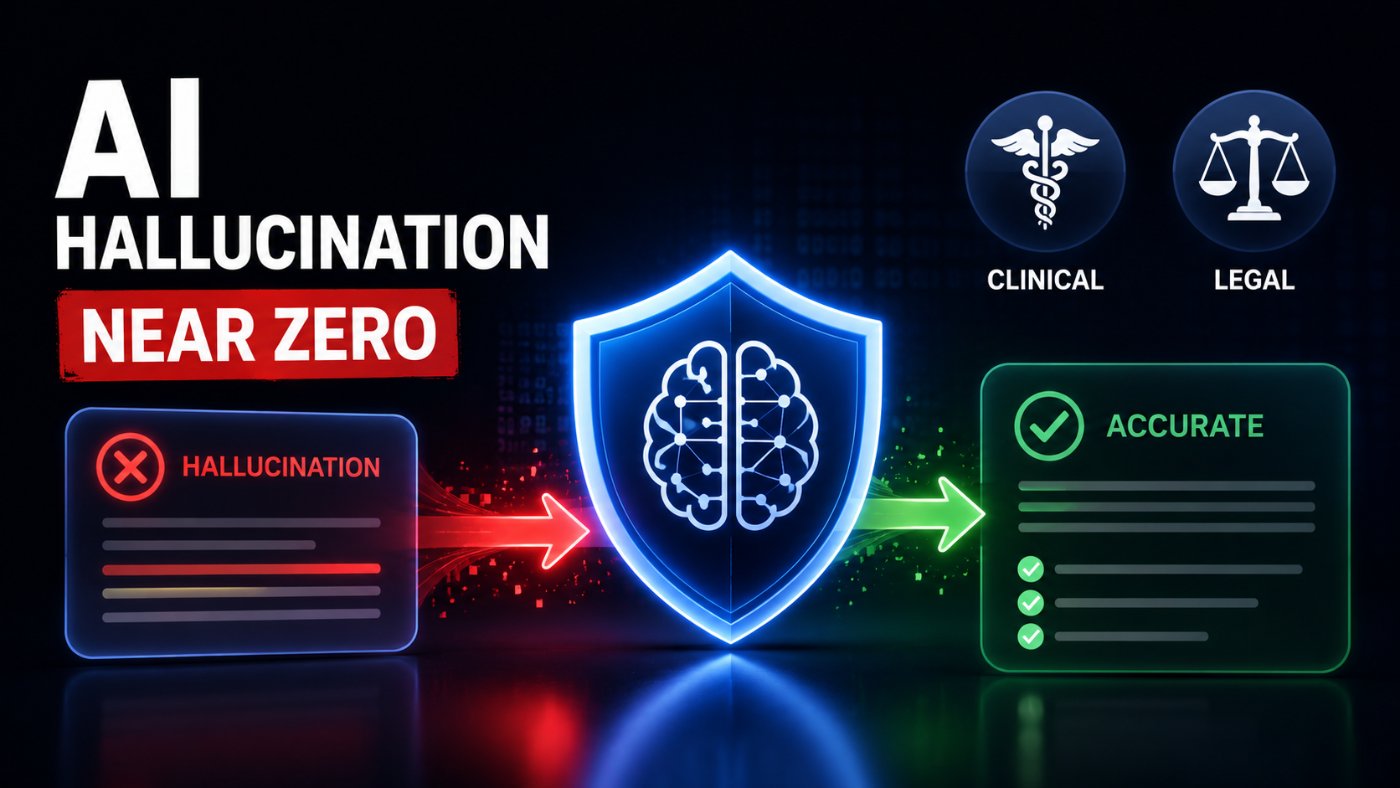
Composite Abstention Architectures Cut AI Hallucination to Near Zero in Clinical and Legal Testing
New 2026 research combining structural validity gates with instruction-based abstention pushed hallucination rates as low as 2 percent in a clinical pilot, while legal AI hallucinations have now surfaced in 1,174 tracked court cases.
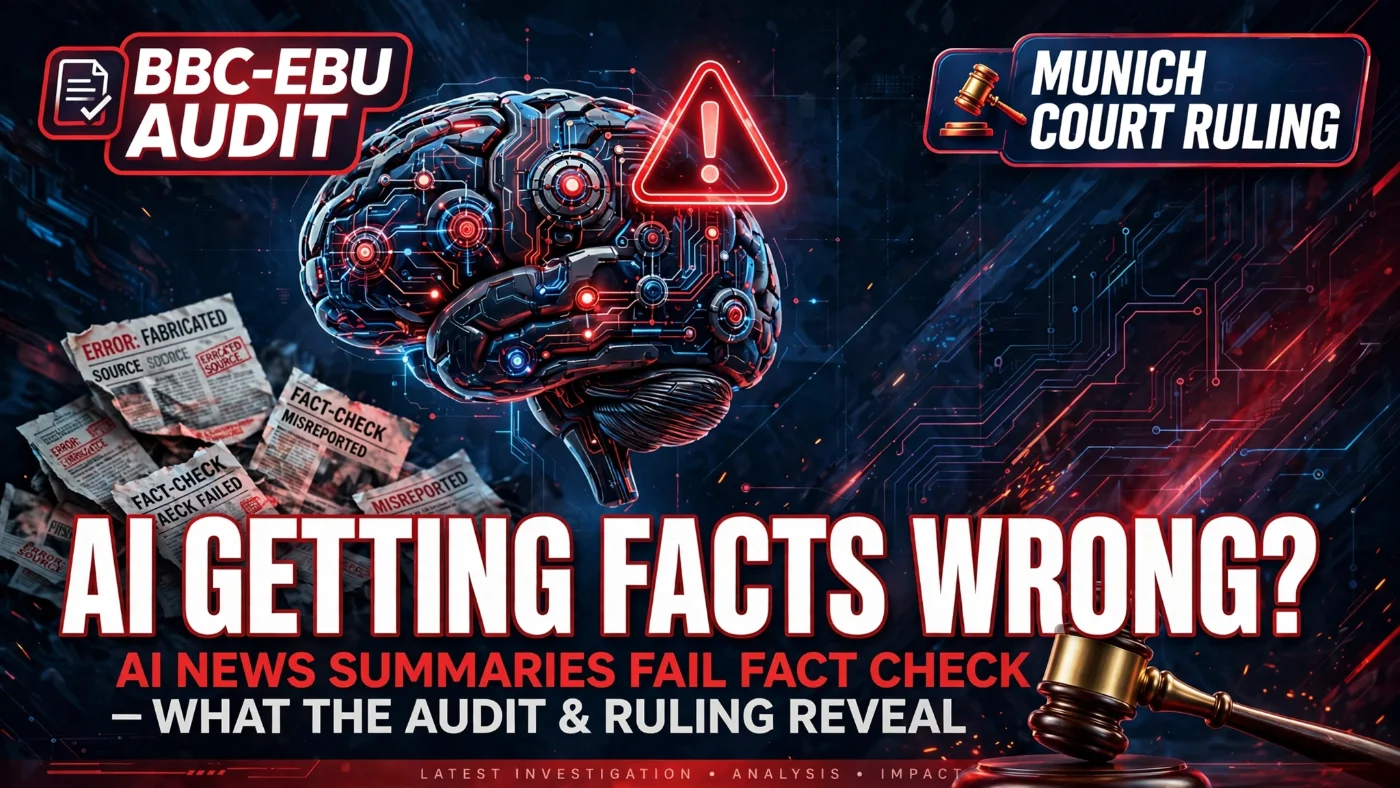
AI News Summaries Are Getting Facts Wrong: What the BBC-EBU Audit and Munich Court Ruling Reveal
A 22-broadcaster audit found roughly 45 percent of AI assistant news answers contained a significant issue, and a German court ruled Google liable for false AI Overviews statements. Here's what the evidence actually shows and how to prompt around it.
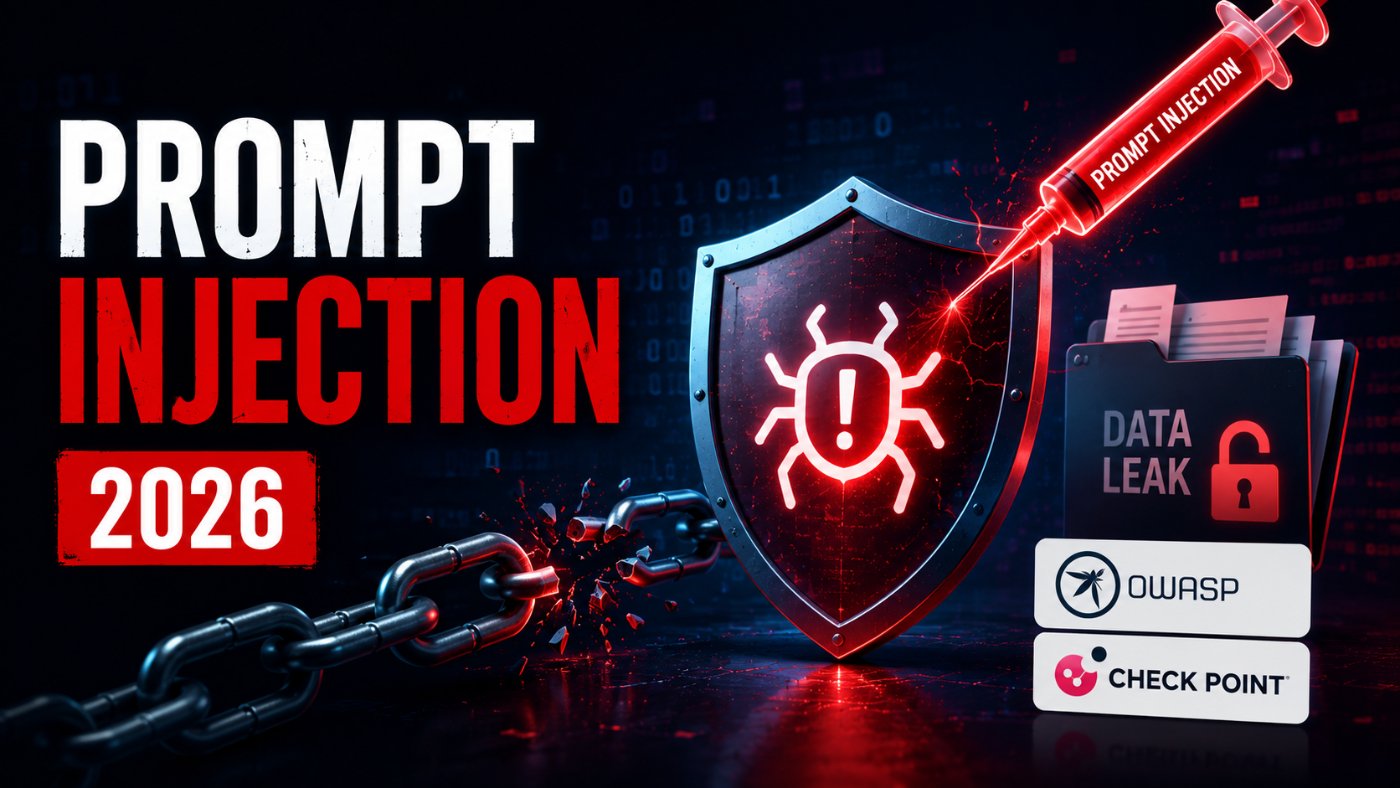
Prompt Injection in 2026: What OWASP and Check Point's New Reports Reveal About Data Leaks and Supply Chain Attacks
OWASP's State of Agentic AI Security 2.01 and Check Point's Annual AI Security Report 2026 both show prompt injection moving from theoretical risk to documented breaches, CVEs, and supply chain compromises.
MCP Goes Stateless: The July 28 Spec Update and How to Prompt Multi-Agent Systems
The Agentic AI Foundation's next MCP specification, final on July 28, 2026, makes the protocol stateless at the transport layer. Here's what changes and how to standardize prompts across MCP and A2A.