
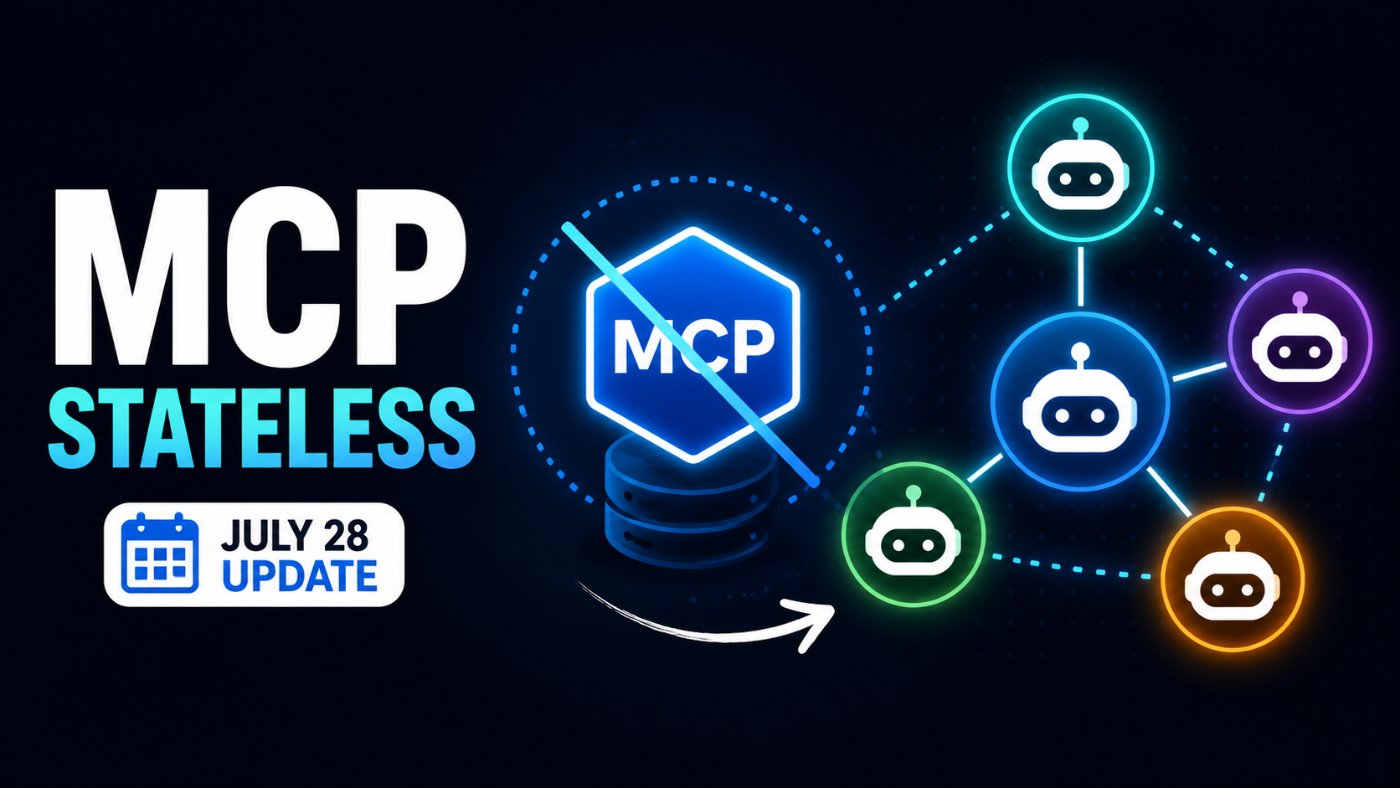
MCP Goes Stateless: The July 28 Spec Update and How to Prompt Multi-Agent Systems
The Agentic AI Foundation released a release candidate on June 19, 2026 for the next Model Context Protocol specification, with the final version locked for July 28, 2026. The headline change makes MCP stateless at the transport layer, replacing hidden session memory with explicit handles that both the model and the server can see and pass around.
The update lands as MCP and Google's Agent-to-Agent protocol, A2A, are converging into a two-layer standard for multi-agent systems under the same governance roof, the Linux Foundation's Agentic AI Foundation (AAIF). That convergence is why prompt engineering for agent handoffs now needs a standardized shape, not a per-framework improvisation. A model that cannot reason about a session handle, or an agent that hands off a task without a validated schema, breaks the same way twice, once at the protocol level and once at the prompt level.
What Changes on July 28
MCP's next specification removes hidden session state from the protocol layer. Today, a server can silently remember which repository an agent is analyzing or which browser session it is driving, tied to a transport-level session that the model cannot see or reason about. The new spec makes that state explicit: a tool call can return a handle, the model can read that handle, pass it back on a later call, and the client can log it as part of the visible workflow.
The AAIF frames this as a maturity step rather than a feature addition. There are breaking changes, and the 10-week window between the June 19 release candidate and the July 28 final release exists specifically for SDK maintainers and client implementers to test against real workloads before the spec locks.
MCP and A2A: Two Layers of the Same Stack
MCP and A2A now sit under the same governance body but solve different problems. MCP connects an agent to tools, data, and services, the equivalent of giving an agent hands. A2A connects one agent to another agent across organizational or framework boundaries, delegating a task the way a person hands off work to a colleague. A2A reached version 1.0 in April 2026 with signed Agent Cards for verifiable identity, and its task lifecycle tracks six states: submitted, working, input-required, completed, failed, and canceled.
Both protocols now report under the AAIF, launched by the Linux Foundation in December 2025 with Anthropic, Block, and OpenAI as founding project donors, and AWS, Bloomberg, Cloudflare, Google, and Microsoft as supporting platinum members. In June 2026 a fourth hosted project, Solo.io's agentgateway, joined as a unified traffic layer for MCP, A2A, inference, and conventional API calls under one security and observability boundary.
Verma notes: teams keep treating MCP and A2A as competing choices. They are not. If your agent needs a tool, that is MCP. If your agent needs to delegate to another agent it does not control, that is A2A. Most production systems will end up running both.
Why Statelessness Changes Prompting
A prompt written against the old, implicit-session version of MCP assumes the server remembers context between calls. Under the new spec, it does not, unless the model explicitly carries a handle forward. That is a prompting problem before it is an engineering problem: an agent that does not reason about handles will silently lose context the moment a request moves across server instances.
The same failure mode shows up in agent-to-agent handoffs on A2A. A handoff without full context transfer, without schema validation on the handoff message, or without a boundary check before the next agent proceeds, produces the same class of silent failure as a dropped MCP session, just one layer up the stack. Industry guidance on multi-agent orchestration reports that structured, validated handoffs reduce process errors by roughly 45 percent compared to free-text handoffs.
Standardized Handoff Prompting
Passing State Across a Stateless MCP Call
Bad Prompt (what most people type)
Continue working on the repo from before.
Good Prompt (adds structure and context)
Continue analyzing the repository using handle repo_20260710_a.
Confirm the handle is still valid before making changes.
Expert Prompt (production-ready, fully specified)
<session_state>
handle: repo_20260710_a
expected_scope: read-write on /src, read-only elsewhere
</session_state>
Task: Resume the refactor of the auth module using the handle above. Before your first tool call, verify the handle resolves to the expected repository and scope. If it does not, stop and report the mismatch instead of proceeding. Log every tool call that uses this handle so the session stays auditable.
What changed: the Expert version treats the handle as something to verify, not assume, which matches how the new MCP spec expects state to be checked explicitly rather than trusted implicitly. It also adds a logging instruction so the handoff stays observable, the same principle A2A applies with signed Agent Cards.
Copy-Paste Template: Standardized Agent Handoff
Use this exactly as written. Replace the [brackets] with your specifics.
You are [AGENT ROLE] receiving a handoff for [TASK]. Handoff payload: { task_id: [ID], context: [SUMMARY], results: [PRIOR OUTPUT], next_action: [WHAT YOU SHOULD DO] } Before acting: validate the payload against the expected schema. If a required field is missing or malformed, stop and report it instead of guessing its value. Scope: only use the context provided in this handoff. Do not assume access to state from earlier in the conversation unless a handle is explicitly included. Output: report [WHAT YOU SHOULD RETURN] in [FORMAT], then state whether the task is complete, blocked, or handed off again.
-- Role: which agent in the chain this prompt configures
-- Task: what it should produce
-- Format: how it should be structured
-- Constraints: what it must and must not do
-- Tone: how it should sound
Save this to your prompt library at promptailearning.com/prompts.
Prompt Glossary
Session handle: an explicit token a server returns and a model can pass back in later calls to reference stored state, replacing hidden transport-level sessions.
Agent Card: a JSON document an agent publishes describing its capabilities, transport, and authentication requirements so other agents can discover it under A2A.
Task lifecycle: the set of states an A2A task moves through, from submitted to completed, failed, or canceled.
Structured handoff: passing a validated, schema-checked message between agents instead of free text, used to reduce coordination errors.
Key Takeaways
• MCP's next specification finalizes July 28, 2026, and makes protocol state explicit instead of hidden in transport sessions.
• A2A reached version 1.0 in April 2026 with signed Agent Cards and a six-state task lifecycle.
• MCP and A2A now report to the same governance body, the Linux Foundation's Agentic AI Foundation, launched December 2025.
• Structured, validated agent handoffs reportedly cut coordination errors by about 45 percent versus free-text handoffs.
• Prompts that assume implicit session memory will break under the new MCP spec unless they explicitly track handles.
Recommended Reading
The Guide to Agentic Prompts
What is a System Prompt?
How to Build AI Workflows Without Code
Best Claude AI Prompts 2026: 25+ Types With Examples
Frequently Asked Questions
What is changing in the MCP spec on July 28, 2026?
The Model Context Protocol becomes stateless at the transport layer. Instead of hidden session memory, servers return explicit handles that models can see, verify, and pass forward, and the change includes breaking changes for existing implementations.
What is the difference between MCP and A2A?
MCP connects an agent to tools, data, and services. A2A connects one agent to another agent across organizational or framework boundaries. A2A reached version 1.0 in April 2026 with signed Agent Cards and a six-state task lifecycle.
Who governs MCP and A2A now?
Both report to the Agentic AI Foundation, launched by the Linux Foundation in December 2025 with Anthropic, Block, and OpenAI as founding project donors, alongside supporting members including AWS, Google, and Microsoft.
How much do structured agent handoffs reduce errors?
Industry research on multi-agent orchestration reports that structured, schema-validated handoffs reduce process hand-off errors by approximately 45 percent compared to unstructured, free-text handoffs.
Do I need to change my prompts for the new MCP spec?
Yes, if your prompts assume the server remembers context between calls. Under the new stateless model, prompts need to explicitly reference and verify session handles rather than assuming continuity.
Explore More on Prompt AI Learning
STAY UPDATED WITH AI NEWS
Follow the full AI news series and never miss a story:
• Daily AI News - Top 5 Stories Every Morning
• Weekly AI Roundups - 15+ Stories Every Monday
• Monthly AI Recaps - Full Archive by Month
LEARN THE MODELS MAKING THESE HEADLINES
The systems in today's news are only useful if you know how to prompt them well. Start here:
• Best Claude AI Prompts 2026 - 25+ Types With Examples
• Best ChatGPT Prompts 2026 - 200+ Real Examples
• Best Gemini AI Prompts 2026 - 100+ Templates
COMPARE THE MODELS
Not sure which model or protocol to use? These comparison pages give you the full picture:
• ChatGPT vs Claude - Full 2026 Comparison
• AI Models Directory - Compare 60+ LLMs, Image and Video Models
BUILD SKILLS THAT COMPOUND
Reading AI news is step one. Building skills with these systems is step two:
• Free Prompt Library - 213+ Copy-Paste Templates
• Start Prompt Engineering - Free Course for All Levels
• The Guide to Agentic Prompts
• Coding Prompts for Developers - Production-Ready Templates
USE PROMPTS FOR THE NEWS TOPICS YOU READ ABOUT TODAY
Every story in today's post maps to a real use case. These prompt categories help you act on what you read:
• Business and Strategy Prompts - Analysis, Pitch Decks, OKRs
• Writing and Content Prompts - Emails, Case Studies, White Papers
• AI Knowledge Hub - Technical Blueprints and Career Guides
ABOUT THIS BLOG
promptailearning.com publishes free daily AI news, weekly roundups, monthly recaps, prompt guides, model comparisons, and course content for anyone who wants to get better at using AI. Written by Swatantra Verma. No paywalls, no fluff.
Connect With Us
• Email: contact@promptailearning.com
• Founder: Swatantra Verma on LinkedIn
• Co-Founder: Prateek Patel on LinkedIn
• Company LinkedIn: Prompt AI Learning
Company X: @promptailearnin
Similar Updates
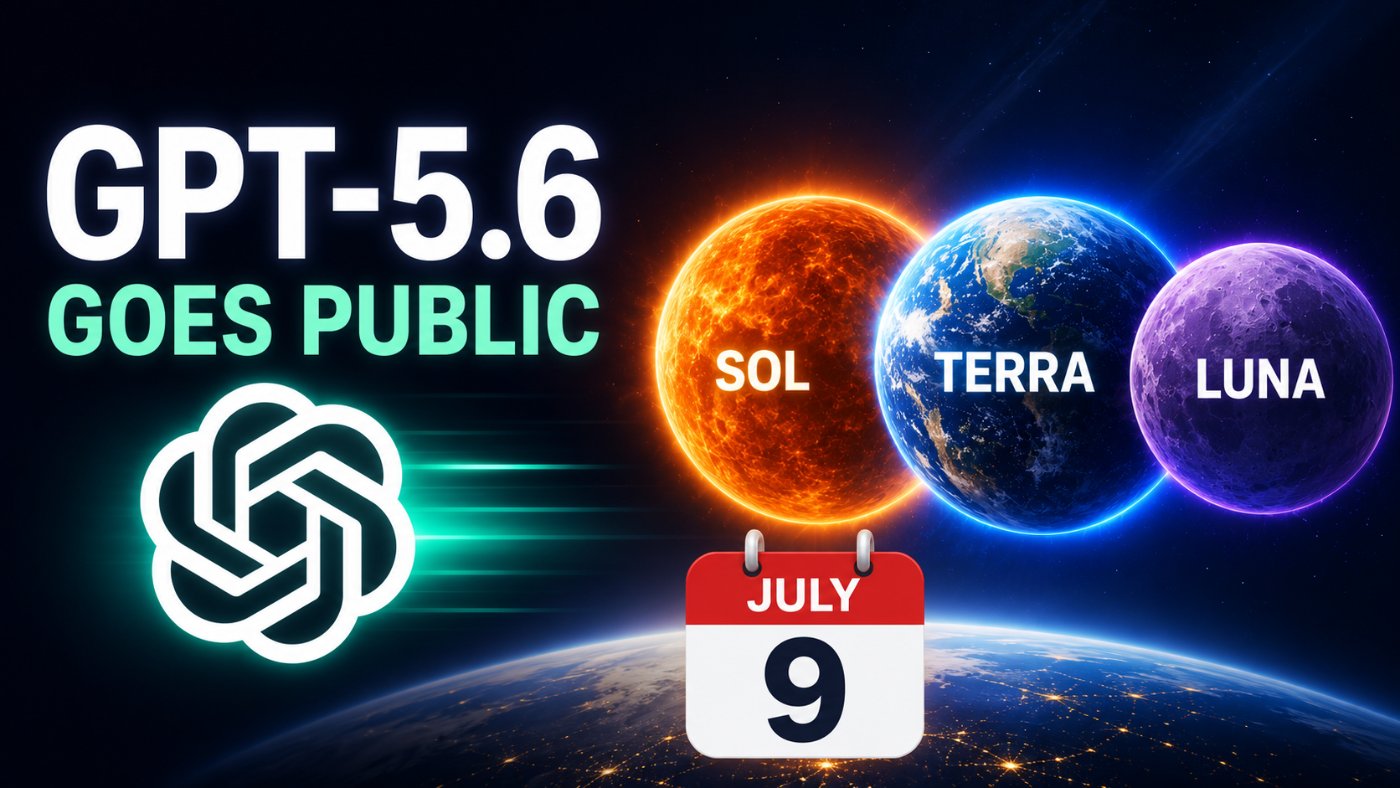
GPT-5.6 Goes Public: Sol, Terra, and Luna Launch July 9 After Government Review
OpenAI moved GPT-5.6 Sol, Terra, and Luna from a government-gated limited preview to public rollout on July 9, 2026. Sol leads Terminal-Bench 2.1 at 88.8 percent, with an Ultra mode reaching 91.9 percent.
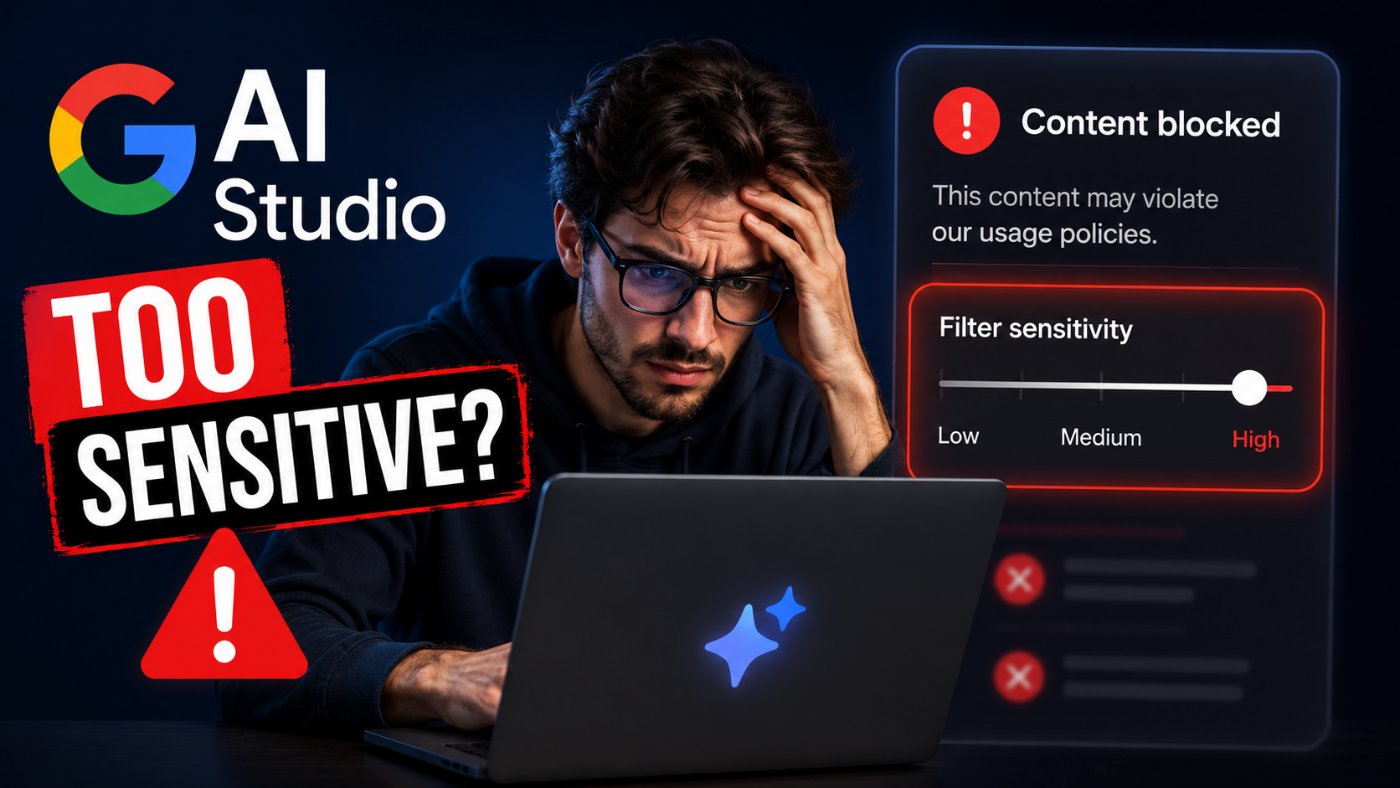
Google AI Studio Filter Sensitivities Frustrate Developers
Developers report Google AI Studio's safety filters are blocking harmless prompts, from fiction translation to original photography, renewing scrutiny of Gemini's content moderation.

Today in AI: 5 Stories Shaping the Future, June 26, 2026
June 26, 2026: The co-author of the Transformer paper that powers every major AI model just joined OpenAI, a new attack class called Agentjacking hit 2,388 organizations with 85 percent success, Gemini 3.5 Pro has four days left, and the White House signed a sweeping AI executive order.

AI Today: GPT-5.6 Missed, Gemini Deadline Looms, Claude Enters Slack
GPT-5.6 window closes as July launch looms, Gemini 3.5 Pro deadline arrives with 5 days left, Anthropic's Claude Tag reshapes enterprise Slack workflows, SK Hynix files for a $29.4B US listing, and the coding AI arms race gets a new CNBC scorecard. Five stories from June 25, 2026.