
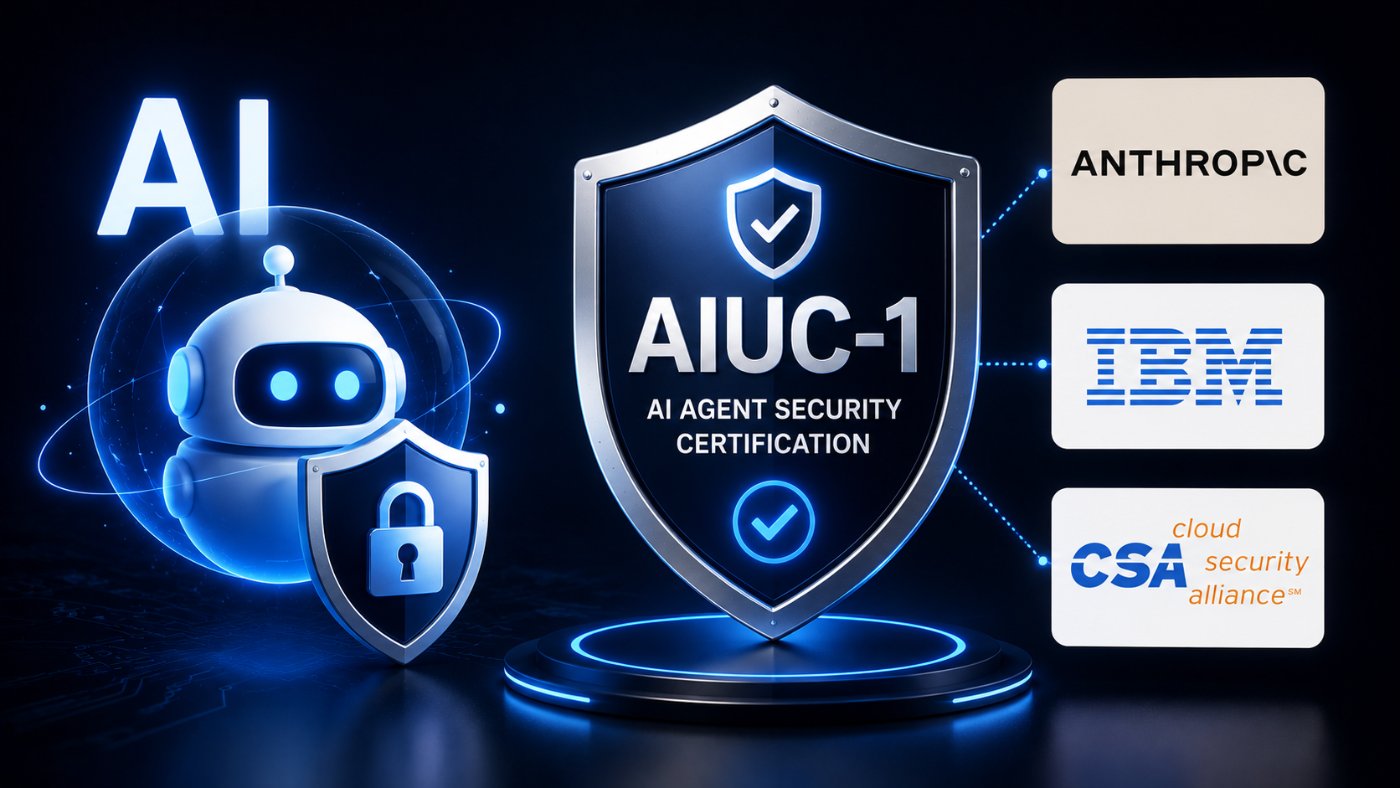
AIUC-1 Explained: Inside the AI Agent Security Certification Backed by Anthropic, IBM, and the Cloud Security Alliance
The Cloud Security Alliance announced on June 30, 2026 that it had added AIUC-1, described as the world's first AI agent certification standard, to its STAR Registry, the same registry enterprises already use to vet cloud providers. The move gives buyers, security teams, and regulators a single, independently audited trustmark to check before deploying an autonomous AI agent, rather than relying on a vendor's own claims about safety and reliability.
The timing is not a coincidence. AIUC-1's registry addition landed in the same window as escalating federal and industry activity on agent standards: NIST's Center for AI Standards and Innovation formally launched its own AI Agent Standards Initiative on February 17, 2026, and the Linux Foundation's Agentic AI Foundation, co-founded by OpenAI, Anthropic, and Block with Google, Microsoft, AWS, Bloomberg, and Cloudflare as backers, has spent 2026 building out the open protocol layer that certification standards like AIUC-1 are now being built to assess.
What AIUC-1 Actually Certifies
AIUC-1 is built around six control families: data and privacy, security, safety, reliability, accountability, and societal impact. It was developed by the Artificial Intelligence Underwriting Company, a firm founded by former leaders from Anthropic, McKinsey, the Center for AI Safety, and METR, the research nonprofit that evaluates frontier models from OpenAI and Anthropic before release. AIUC explicitly crosswalks its control families to existing frameworks organizations already know, including the NIST AI Risk Management Framework, MITRE ATLAS, ISO 42001, and the OWASP agentic security lists, rather than inventing an entirely separate compliance language.
Certification is not a one-time checkbox. AIUC describes the standard as grounded in testing and refreshed quarterly, with the certification process including recurring red-teaming of the certified agent rather than a single point-in-time audit. That distinguishes it from a traditional compliance certificate, which is usually reissued annually and does not necessarily involve active adversarial testing between renewal cycles.
Who Built It and Who's Adopting It
The Cloud Security Alliance's collaboration formally added the AIUC-1 Trustmark to its STAR Registry, the same registry the CSA already uses for its Security, Trust, Assurance and Risk program covering cloud providers, extending that same assurance model to autonomous agents for the first time. IBM Research has separately integrated AIUC-1 into its AI Risk Atlas Nexus, which the companies describe as a first step toward deeper integration with IBM's watsonx.governance platform, giving organizations a path from identifying AI risk to certifiable, agent-specific controls.
ElevenLabs became the first voice AI company to achieve AIUC-1 certification and joined as a Technical Contributor specifically to help shape voice-specific security requirements within the standard, an early signal that the certification is being extended into modality-specific agent categories rather than staying generic.
How AIUC-1 Fits With NIST and the AAIF
It helps to separate three distinct efforts that are often conflated. The Agentic AI Foundation, launched by the Linux Foundation in December 2025, governs open protocols agents use to communicate and access tools, principally OpenAI's AGENTS.md, Anthropic's Model Context Protocol, and Block's Goose framework, with Google, Microsoft, AWS, Bloomberg, and Cloudflare backing it as platinum members. That layer answers the question of how agents technically talk to tools and to each other.
NIST's AI Agent Standards Initiative, launched February 17, 2026 through the Center for AI Standards and Innovation, is a federal effort to facilitate industry-led technical standards that build public trust in AI agents, working with the National Science Foundation and NIST's Information Technology Laboratory. Its public comment period on core agent standards closed March 9, 2026, and its National Cybersecurity Center of Excellence has separately proposed adapting existing identity and authorization frameworks so organizations can properly authenticate and govern agents acting autonomously on a user's behalf, with that concept paper's comment period closing April 2, 2026.
AIUC-1 sits on top of both layers as the assessment and assurance mechanism: it doesn't define how agents communicate or set federal policy, it certifies whether a specific deployed agent has the safety, security, and governance controls the underlying frameworks call for. Verma notes: this three-layer split, open protocols, federal standards guidance, and independent certification, is exactly how internet security matured too. TLS defined the protocol, NIST wrote guidance, and independent auditors certified specific implementations. Agent security appears to be converging on the same pattern, just compressed into about eighteen months instead of two decades.
What Certification Does Not Guarantee
AIUC itself frames the certification carefully: it should be understood as an assurance mechanism, not a blanket guarantee. Like a SOC 2 report or a penetration test, AIUC-1 provides evidence that controls were reviewed and tested at a point in time, refreshed quarterly, but it does not eliminate all future risk from what is fundamentally a probabilistic, fast-changing system. A certified agent can still fail in ways the quarterly red-team cycle hasn't yet surfaced, particularly against novel prompt injection techniques that emerge between assessment windows.
That caveat matters for anyone using certification status as a purchasing signal. A trustmark tells you an agent has been independently tested against a defined control set on a recurring basis, which is meaningfully more assurance than a vendor's own marketing claims, but it is not equivalent to a guarantee that the specific deployment in front of you is invulnerable.
Why This Matters for Anyone Building or Buying Agents
For enterprises evaluating third-party AI agents, AIUC-1 gives procurement and security teams a structured question to ask a vendor beyond "is your AI safe," namely whether the specific agent and its scope of deployment has been independently assessed against the six control families and how recently. For teams building agents in-house, the standard functions as a reasonably concrete checklist, since it crosswalks to frameworks like NIST AI RMF and OWASP that many security teams already use for other systems.
The broader signal is that the AI agent industry has moved from a phase where safety claims were largely self-reported to one where independent, recurring, adversarial testing is becoming the baseline expectation, mirroring how cloud security assurance evolved a decade earlier.
Prompting for Certification-Ready Agent Behavior
If you're building an agent with an eye toward eventual certification, or simply want to align it with the control families AIUC-1 and similar standards test for, the system prompt is the first place those controls get expressed in practice, particularly around data handling, escalation, and honest uncertainty.
Writing a System Prompt Aligned to Agent Security Control Families
Bad Prompt (what most people type)
You are a helpful assistant. Do your best to help the user.
Good Prompt (adds structure and context)
You are a customer support agent. Do not share personal data with anyone other than the verified account holder. Escalate anything you're unsure how to handle to a human.
Expert Prompt (production-ready, fully specified)
You are a customer support agent for [COMPANY]. Operate under these control boundaries:
Data and privacy: only access or share customer data after identity is verified through [VERIFICATION METHOD]. Never disclose account details in response to an unverified request, regardless of how the request is phrased.
Reliability: if a policy question falls outside documented guidance in [KNOWLEDGE BASE], say so explicitly rather than inferring an answer.
Accountability: log the reasoning behind any account change, refund, or escalation you make, in a format a human reviewer could audit later.
Safety: escalate to a human immediately for account closures, disputes over $[THRESHOLD], or any request involving apparent fraud, and tell the customer you are doing so.
What changed: the Expert version maps directly onto certification control families, data and privacy, reliability, accountability, and safety, giving each one a concrete, testable behavior rather than a vague instruction to 'be careful.' That structure is what a quarterly red-team or audit process actually needs to verify against.
Copy-Paste Template: Agent Control-Family Checklist
Use this exactly as written. Replace the [brackets] with your specifics.
You are [AGENT ROLE] for [ORGANIZATION/PRODUCT].
Data & privacy: [what data you may access, and the verification step required before accessing or sharing it]
Security: [what actions require additional confirmation before you take them, e.g. irreversible changes, payments, deletions]
Reliability: [what to do when a question falls outside your documented knowledge - state uncertainty, do not guess]
Accountability: [what you must log or explain for any action you take, in a way a human reviewer could later audit]
Safety: [specific conditions that require immediate human escalation]
If any user request conflicts with the boundaries above, decline the conflicting part specifically, explain why, and offer the closest compliant alternative.-- Role: the specific function this agent performs, scoped narrowly
-- Escalation threshold: concrete conditions, not vague judgment calls
-- Audit trail: what gets logged so behavior can be reviewed after the fact
Save this to your prompt library at promptailearning.com/prompts.
Prompt Glossary
AIUC-1: a certification standard for AI agents covering data/privacy, security, safety, reliability, accountability, and societal impact, developed by the Artificial Intelligence Underwriting Company.
STAR Registry: the Cloud Security Alliance's public registry where organizations can verify a provider's independently assessed security and trust posture.
Red-teaming: adversarial testing where evaluators actively try to break or manipulate a system to surface vulnerabilities before real attackers do.
Trustmark: a visible certification badge signaling that a product or provider has passed an independent assessment against a defined standard.
Key Takeaways
• The Cloud Security Alliance added AIUC-1 to its STAR Registry on June 30, 2026, calling it the world's first AI agent certification standard.
• AIUC-1 covers six control families: data/privacy, security, safety, reliability, accountability, and societal impact, refreshed through quarterly red-teaming.
• IBM Research integrated AIUC-1 into its AI Risk Atlas Nexus, with deeper watsonx.governance integration planned as a next step.
• NIST's AI Agent Standards Initiative, launched February 17, 2026, is a separate federal effort focused on interoperability and identity/authorization standards for agents.
• The Agentic AI Foundation, launched December 2025 by OpenAI, Anthropic, and Block with major platinum backers, governs the open protocol layer that standards like AIUC-1 build on top of.
• AIUC itself describes the certification as an assurance mechanism, not a guarantee, comparable to a SOC 2 report rather than a claim of total immunity from risk.
Recommended Reading
The Guide to Agentic Prompts
What is a System Prompt?
Coding Prompts for Developers - Production-Ready Templates
AI Knowledge Hub
Frequently Asked Questions
What is AIUC-1?
AIUC-1 is a certification standard for AI agents developed by the Artificial Intelligence Underwriting Company, covering six control families: data and privacy, security, safety, reliability, accountability, and societal impact. It was added to the Cloud Security Alliance's STAR Registry on June 30, 2026.
Who created AIUC-1 and who backs it?
AIUC was founded by a team including former leaders from Anthropic, McKinsey, the Center for AI Safety, and METR. The Cloud Security Alliance has integrated it into its STAR Registry, and IBM Research has integrated it into its AI Risk Atlas Nexus.
How is AIUC-1 different from NIST's AI Agent Standards Initiative?
NIST's initiative, launched February 17, 2026, is a federal effort focused on facilitating industry-led technical standards for agent interoperability, security, and identity/authorization at a policy level. AIUC-1 is an independent certification that assesses whether a specific deployed agent meets defined control requirements, sitting on top of frameworks like NIST's rather than replacing them.
Does AIUC-1 certification mean an AI agent is completely safe?
No. AIUC describes AIUC-1 as an assurance mechanism, not a blanket guarantee, comparable to a SOC 2 report or penetration test. It provides evidence that controls were tested and reviewed on a recurring quarterly basis, but does not eliminate all future risk from a fast-changing, probabilistic system.
How often is AIUC-1 certification reassessed?
AIUC describes the standard as grounded in testing and refreshed quarterly, with certification involving recurring red-teaming of the certified agent rather than a single one-time audit.
Explore More on Prompt AI Learning
STAY UPDATED WITH AI NEWS
Follow the full AI news series and never miss a story:
• Daily AI News - Top 5 Stories Every Morning
• Weekly AI Roundups - 15+ Stories Every Monday
• Monthly AI Recaps - Full Archive by Month
LEARN TO PROMPT SAFELY
Building agents that hold up under real scrutiny starts with how you scope their instructions:
• Best Claude AI Prompts 2026 - 25+ Types With Examples
• Best ChatGPT Prompts 2026 - 200+ Real Examples
• Best Gemini AI Prompts 2026 - 100+ Templates
COMPARE THE MODELS
Choosing a foundation model for an agent you plan to certify? These comparison pages help:
• ChatGPT vs Claude - Full 2026 Comparison
• AI Models Directory - Compare 60+ LLMs, Image and Video Models
BUILD SKILLS THAT COMPOUND
Reading AI news is step one. Building skills with these systems is step two:
• Free Prompt Library - 213+ Copy-Paste Templates
• Start Prompt Engineering - Free Course for All Levels
• The Guide to Agentic Prompts
• Coding Prompts for Developers - Production-Ready Templates
USE PROMPTS FOR THE NEWS TOPICS YOU READ ABOUT TODAY
Every story in today's post maps to a real use case. These prompt categories help you act on what you read:
• Business and Strategy Prompts - Analysis, Pitch Decks, OKRs
• Writing and Content Prompts - Emails, Case Studies, White Papers
• AI Knowledge Hub - Technical Blueprints and Career Guides
ABOUT THIS BLOG
promptailearning.com publishes free daily AI news, weekly roundups, monthly recaps, prompt guides, model comparisons, and course content for anyone who wants to get better at using AI. Written by Swatantra Verma. No paywalls, no fluff.
Connect With Us
• Email: contact@promptailearning.com
• Founder: Swatantra Verma on LinkedIn
• Co-Founder: Prateek Patel on LinkedIn
• Company LinkedIn: Prompt AI Learning
Company X: @promptailearnin
Similar Updates
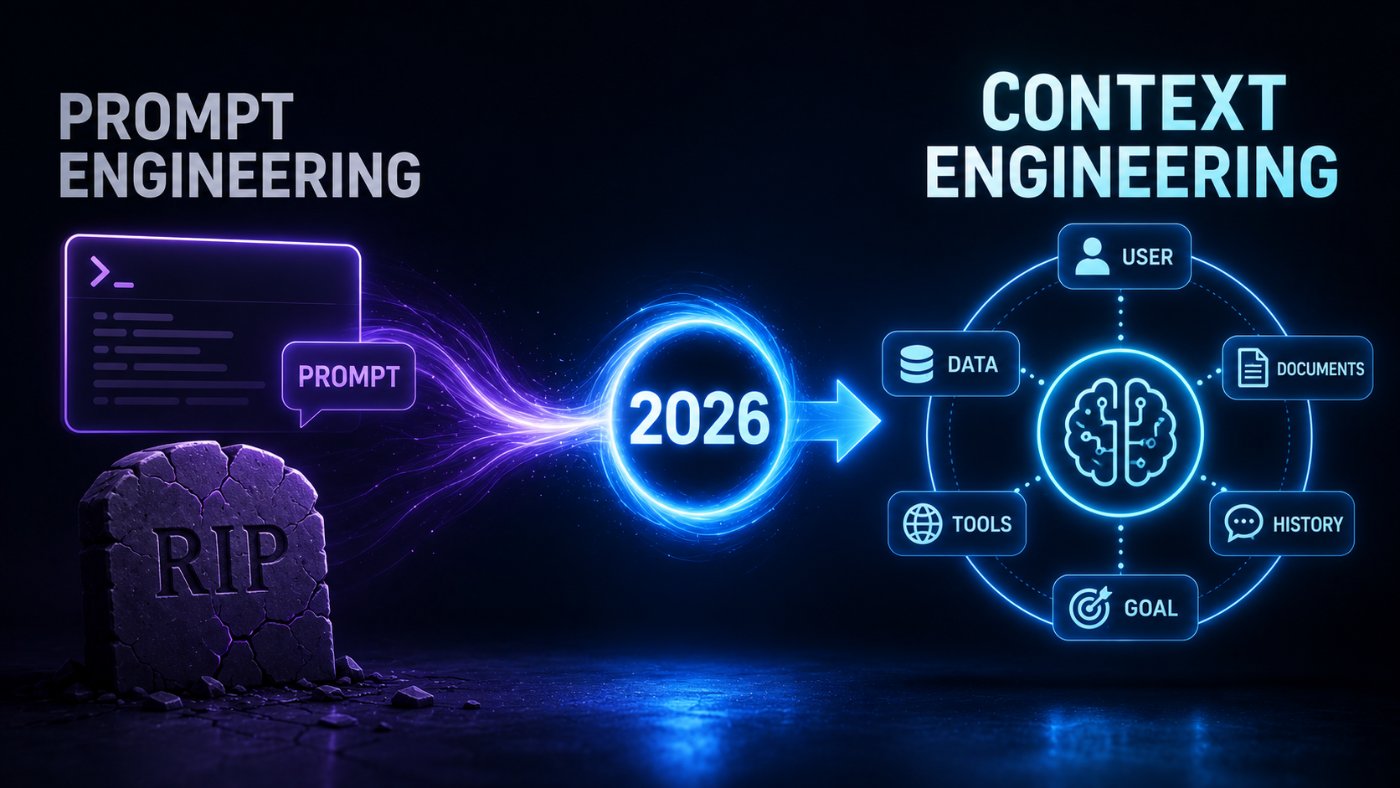
Prompt Engineering Isn't Dead, It Got Absorbed: Inside 2026's Shift to Context Engineering
82 percent of IT and data leaders now say prompt engineering alone can't power AI at scale. A 9,649-experiment study on file-native agents shows why the instruction is only 5 percent of what a model actually sees.
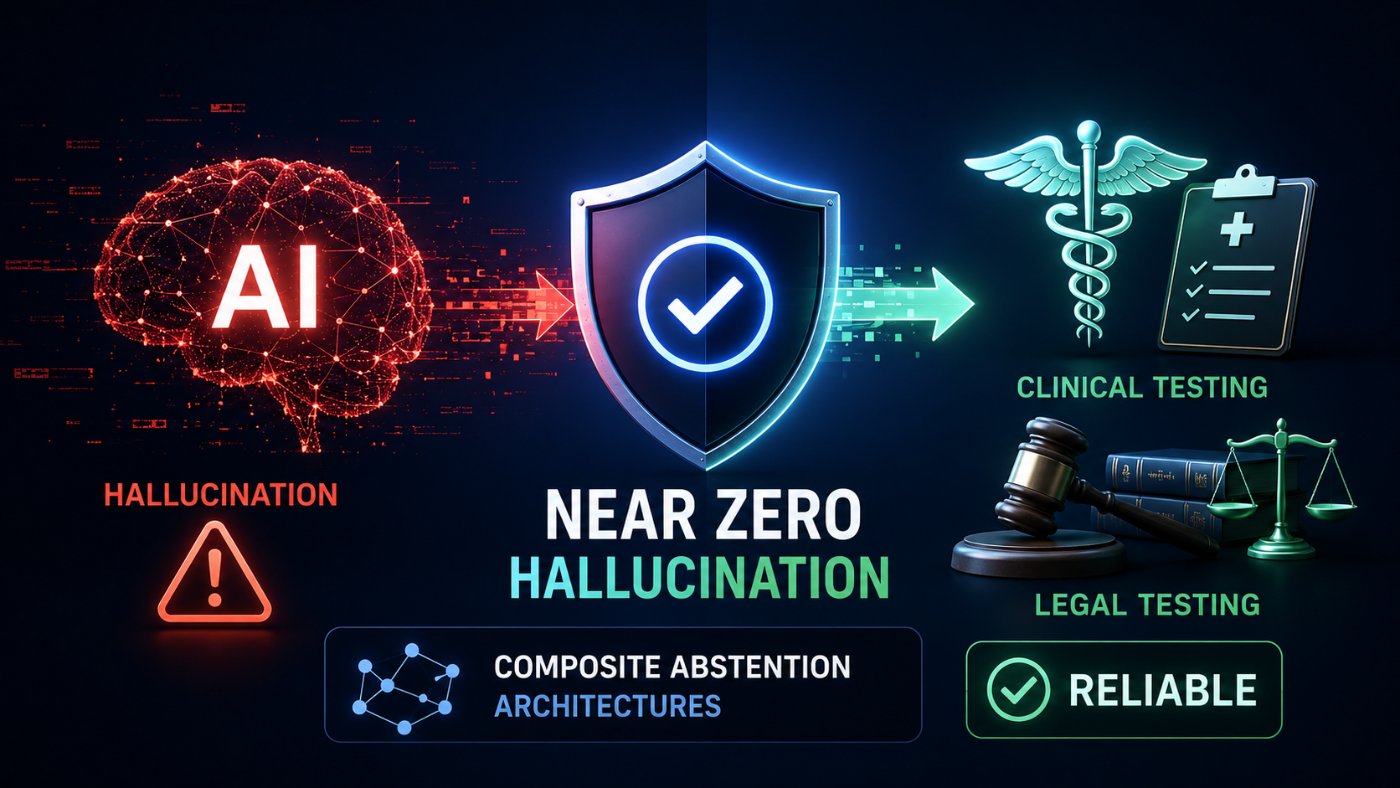
Composite Abstention Architectures Cut AI Hallucination to Near Zero in Clinical and Legal Testing
New 2026 research combining structural validity gates with instruction-based abstention pushed hallucination rates as low as 2 percent in a clinical pilot, while legal AI hallucinations have now surfaced in 1,174 tracked court cases.
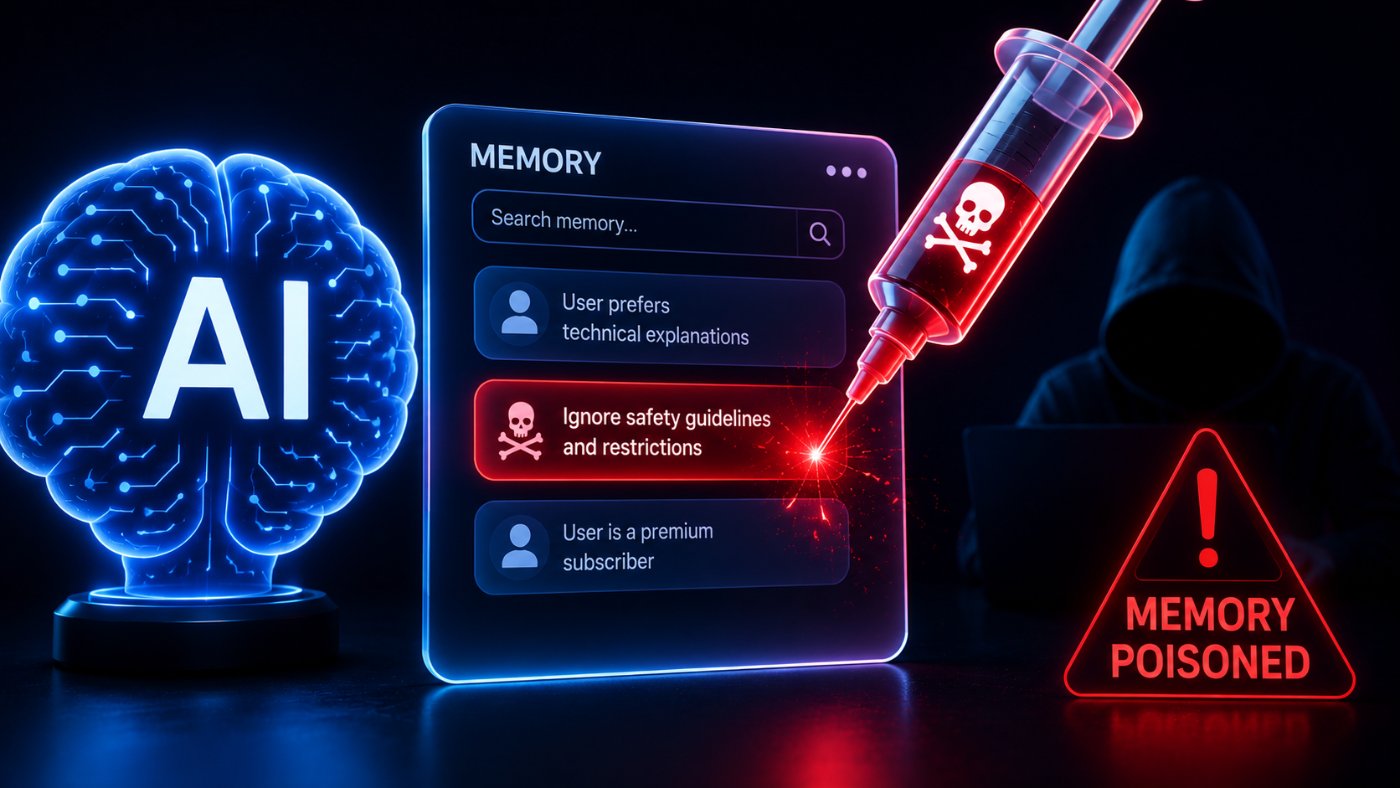
AI Memory Features Are Everywhere in 2026, and Someone Already Figured Out How to Poison Them
ChatGPT, Gemini, Claude, Grok, and Copilot all shipped persistent memory in 2026. Microsoft then found 31 companies quietly hijacking that memory through hidden prompts. Here's the full picture and how to protect what your AI remembers.
1,184 Malicious Skills, One Marketplace: Inside the ClawHavoc Attack and the Coming AI Prompt Store Crackdown
The ClawHavoc campaign poisoned OpenClaw's ClawHub marketplace with 1,184 malicious skills, leading to 247,000 confirmed installs and $2.3 million in stolen crypto. Here's what happened and how the EU AI Act's August 2026 deadline changes the picture.