

Top AI News Today: July 25, 2026
Fifty-one percent. That is the share of confident answers that independent testers say Moonshot's new Kimi K3 fabricates, a number that landed the same week Anthropic quietly shipped a new flagship of its own. Claude Opus 5 arrived on Friday, ChatGPT Health went nationwide a day after a lawsuit over a near-fatal suggestion, and two AI hardware startups pulled in more than $800 million between them. Layer in a EU compliance deadline that is now just over a week away, and July 25 reads like a snapshot of an industry moving on every front at once: models, money, health, hardware, and regulation, all in the same 24 hours.
Anthropic Officially Launches Claude Opus 5
Anthropic released Claude Opus 5 on Friday, a model the company says delivers nearly all the intelligence of its top-tier Claude Fable 5 at half the cost, a launch that signals how the AI race is shifting from raw capability to the economics of daily use. The model is available immediately across Anthropic's platforms, priced at $5 per million input tokens and $25 per million output tokens, unchanged from its predecessor Opus 4.8. It is now the default model on Claude Max, Anthropic's premium consumer tier, and the strongest model available on Claude Pro.
The positioning is deliberate. Anthropic is not claiming Opus 5 is its smartest model, that distinction still belongs to Fable 5, and rival systems keep an edge in certain domains. Instead, the company is arguing that the most economically important AI work happens in a middle band of difficulty, where near-frontier intelligence delivered efficiently matters more than chasing the very top of the benchmark charts. Opus 5 ships with an adjustable effort setting that lets customers trade intelligence for speed and token savings, and Anthropic's own charts emphasize performance at a given cost rather than peak performance alone. The launch also lands as Anthropic works through IPO preparations, having confidentially filed an S-1 with the SEC on June 1 following a $65 billion funding round that valued the company at roughly $965 billion. It is the fourth model in Anthropic's Claude 5 lineup, joining Sonnet 5, Fable 5, and Mythos 5, the last of which remains limited to a small group of vetted organizations given its cybersecurity capabilities.
Early customers echoed the cost argument with specific numbers. Harvey, the legal AI company, said Opus 5 matched Opus 4.8's maximum-reasoning performance while generating 26 percent fewer tokens on average, according to its head of applied research, Niko Grupen. Fundamental Research Lab reported nine percentage points higher accuracy on hard financial-modeling tasks while using roughly a third fewer turns and tool calls and 60 percent less time. Notably, Opus 5 actually outperforms Fable 5 on a number of the benchmarks included in Anthropic's own announcement, arriving just two months after Opus 4.8 became available on May 28.
Anthropic also softened some of the restrictions that came with its more capable models. The company said its safety classifiers should engage roughly 85 percent less often for Opus 5 than they do for Fable 5, reflecting a lighter touch appropriate to a less capable model, and it is rolling out a new tool meant to make those safeguards less disruptive when they do trigger. Meaningful limits remain around cybersecurity tasks such as exploit generation, and Anthropic said Opus 5 is its most aligned Opus model yet and the least susceptible to being tricked into misuse. The model is also pitched at the scientific community as Anthropic's most capable generally available model for biology-adjacent research, though the company notes Mythos 5 remains stronger for long-running, autonomous biological work specifically.
This is a smart release to make right before an IPO roadshow: a model that undercuts your own flagship on price while quietly beating it on several benchmarks tells investors your unit economics are improving, not just your intelligence scores. My take is that the real signal here isn't Opus 5 itself, it's that Anthropic now has five distinct price-performance tiers to sell into, which is exactly the kind of product breadth public-market investors reward.
OpenAI Makes ChatGPT Health Available to All US Adults, a Day After a Lawsuit
OpenAI said this week it is making ChatGPT Health, a feature that helps users manage health-related questions, available to all US-based users 18 and older across every plan. The announcement landed a day after a Florida-based pastor sued the company, alleging ChatGPT gave his family member a near-fatal suggestion not to consult a doctor.
OpenAI began testing Health through a dedicated hub in January, letting users connect data from services such as Apple Health, Function, and MyFitnessPal alongside their own health records. At that time the company said users were sending roughly 230 million health-related queries a week; that figure has since climbed to 300 million, underscoring how much medical and wellness questioning already happens inside ChatGPT regardless of whether OpenAI builds dedicated tooling for it. The rollout also arrives the same week OpenAI shipped GPT-Live voice to the ChatGPT desktop app and expanded its small business program, part of a broader push this month to widen ChatGPT's footprint across health, voice, and workplace use cases simultaneously rather than one product line at a time.
With the nationwide rollout, logged-in Free, Go, Plus, and Pro users in the US can securely connect supported health records and Apple Health data, view a dashboard covering lab results, medications, activity, and sleep, and ask questions grounded in their personal health context on web and iOS. By default, ChatGPT asks permission before using connected medical records to personalize a response, users can approve requests individually or allow them permanently, and any data pulled from a disconnected source is deleted from OpenAI's systems within 30 days, though information already inside a saved conversation persists until the conversation itself is deleted.
OpenAI has not publicly detailed the specific allegations in the Florida lawsuit, and the case's outcome remains undetermined. But the timing puts OpenAI in an uncomfortable spot: expanding a feature that puts the model closer to real medical decisions in the same week it is being sued over exactly that kind of decision. The company's bet is that better-grounded, records-connected answers reduce the risk of the kind of failure being alleged, rather than amplify it, but that is a claim regulators and plaintiffs' lawyers will now get to test in public.
Independent Testing Finds Kimi K3's Hallucination Rate Jumped to 51 Percent
Moonshot AI's Kimi K3 is set to release its full open weights on July 27, but a figure absent from the company's own benchmark charts is drawing scrutiny first: independent testing from Artificial Analysis found the model's hallucination rate climbed to approximately 51 percent, up from 39 percent on its predecessor, K2.6, even as its raw factual accuracy improved from 33 to 46 percent on the same evaluation.
Kimi K3 launched on July 16 as a 2.8 trillion-parameter open-weight model, the largest open-weight system ever released, and quickly topped Arena.ai's Frontend Code leaderboard ahead of both Claude Fable 5 and GPT-5.6 Sol. Moonshot itself acknowledges the model still trails those two systems on overall capability. Artificial Analysis measures hallucination rate as incorrect answers divided by all non-correct responses rather than as a share of every answer given, and for context, Claude Fable 5 posts a 54.9 percent rate on the same benchmark, so K3's number is elevated but not wildly out of step with frontier systems generally. The model itself is a mixture-of-experts design activating only 16 of 896 experts per token, paired with an attention mechanism Moonshot calls Kimi Delta Attention that the company says delivers up to 6.3 times faster decoding than standard approaches.
What stands out is the trajectory rather than the absolute level: K3 answers more questions and gets more of them right, while also inventing wrong answers more often than its predecessor did, a pattern several independent analysts have flagged as a genuine trade-off rather than an unambiguous upgrade. The full weights, expected July 27 under a Modified MIT license, will let outside researchers replicate these numbers directly rather than relying on Moonshot's or Artificial Analysis's testing infrastructure. Separately, Moonshot is reportedly raising a new funding round at a valuation exceeding $70 billion and preparing for a possible IPO within six months, even as US officials pursue unresolved distillation and export-control allegations against the company.
Enterprises weighing K3 for fact-sensitive workflows now have a genuinely two-sided decision in front of them: a near-frontier coding model at roughly a third of Claude Fable 5's price, attached to a documented honesty regression its own maker didn't publish. That is a more useful way to think about the open-versus-closed debate than another round of leaderboard screenshots.
AI Chip Startup Etched Raises $300 Million, Doubling Its Valuation to $10.3 Billion
Etched, a Cupertino-based startup building AI chips with no GPUs involved, closed a $300 million Series C this week at a $10.3 billion valuation, doubling its worth from the $5 billion mark it set just seven months ago. The round was led by Sequoia Capital, with Andreessen Horowitz, SK Hynix, Jane Street, and Diffusion Capital also participating alongside earlier backers including Peter Thiel, Andrej Karpathy, Dylan Field, and Amjad Masad.
Founded in 2022 by three Harvard dropouts, Etched builds transformer-specific chips it calls Sohu, manufactured on TSMC's 4-nanometer process and sold as full rack systems rather than standalone accelerators. The company says Sohu delivers roughly a 20-times inference speedup over Nvidia's H100 for transformer workloads specifically, by giving up general-purpose flexibility in exchange for silicon dedicated entirely to the architecture behind ChatGPT, Claude, and nearly every other frontier model in production today. Etched says it has already booked more than $1 billion in customer orders and is now testing first full systems with clients, having recently opened an 80,000-square-foot production facility near its San Jose headquarters.
The round matters partly because of what it signals about where AI hardware money is heading. Training used to be the dominant workload that justified chip spending, but inference, the process of actually running a trained model to answer queries, now consumes a growing majority of AI compute, and Nvidia's general-purpose GPUs waste silicon on capabilities inference doesn't need. That gap is exactly what Etched, along with rivals like Cerebras, Groq, and SambaNova, is racing to fill. Etched says this is the highest valuation Sequoia has ever assigned to one of its own Series C investments.
A chip company reaching a $10 billion-plus valuation before large-scale commercial deliveries is a bet on a thesis, not yet a balance sheet, and the thesis is that specialized inference silicon becomes the default rather than a niche. If Etched's client testing translates into renewed orders once systems actually ship, that bet looks smart in hindsight. If it doesn't, this round becomes the textbook case of AI hardware hype outrunning proof.
Humanoid Robotics Startup Genesis AI in Talks to Raise $500 Million
Genesis AI, a robotics startup, is in talks with investors to raise around $500 million in a new funding round that would value the company at roughly $3 billion before the new money comes in, according to people familiar with the discussions. The talks are ongoing and the final terms could still change.
The round is part of a broader wave of capital moving into physical AI, the category covering robots and embodied systems that apply large-model reasoning to the physical world rather than to chat interfaces or coding tools. Investors have poured money into the space this year on the theory that foundation models trained primarily on text and code are approaching diminishing returns on pure language tasks, while robotics remains comparatively underexplored territory for the same underlying techniques. Genesis AI's exact technical approach and current revenue have not been disclosed publicly as part of the fundraising reports.
A $3 billion valuation for a robotics startup, even a pre-money figure ahead of new investment, places Genesis AI in the same broad tier as other well-funded humanoid and physical-AI companies that have raised large rounds this year, part of a pattern where venture capital increasingly treats robotics as the next logical extension of the foundation-model wave rather than a separate, slower-moving category. Whether that bet pays off will depend on something language models never had to solve well: getting a physical body to do useful, repeatable work outside a lab.
The EU AI Act's Biggest Enforcement Deadline Is Just Over a Week Away
The European Union's AI Act reaches its most consequential enforcement milestone on August 2, when high-risk system obligations and transparency rules become binding across the bloc for most deployed AI systems, a date now roughly a week away. It is the first time any jurisdiction has imposed broad, binding regulation specifically on artificial intelligence, and companies operating in or selling into the EU are in the final stretch of compliance work.
The Act applies extraterritorially, meaning any company placing an AI system on the EU market, or whose system's output is used within the EU, falls under its scope regardless of where the company is headquartered, a reach comparable to how GDPR affected companies with no EU offices at all. Earlier this month the European Commission published guidelines clarifying transparency obligations for providers and deployers of certain AI systems and unveiled a coordinated EU Action Plan on Cybersecurity and Artificial Intelligence, both aimed at giving companies clearer footing before the deadline lands. The Commission has also said it will launch a call to expand EU evaluation capacity for assessing AI models before they reach the market, though that capability is not expected to be operational until 2027.
For companies that have spent the year watching US export controls, Chinese distillation disputes, and chip supply deals dominate the AI news cycle, August 2 is a reminder that the regulatory story isn't only playing out in Washington and Beijing. Firms with EU exposure that have treated AI Act compliance as a someday problem now have single-digit days left to close that gap before enforcement, not guidance, becomes the operative word.
What This Means for AI in the Coming Days
Today's stories split cleanly into two buckets: companies trying to make AI cheaper and more embedded in daily life, and everyone else trying to figure out how much to trust what these systems say and do. Opus 5 and ChatGPT Health both point toward AI moving further into routine, high-stakes territory, workplace tasks and personal medical questions, at exactly the moment Kimi K3's hallucination numbers are a reminder that capability gains and reliability gains are not the same curve. Meanwhile the money keeps flowing into the physical layer underneath all of it, whether that is Etched's inference chips or Genesis AI's robots, on the assumption that whatever these models can now do cheaply and reliably, someone still needs to build the hardware to run it at scale.
Watch for three things next. First, whether Kimi K3's July 27 open-weight release lets independent researchers confirm or complicate the 51 percent hallucination figure once they can test the model directly rather than through an API. Second, how the Florida lawsuit against OpenAI develops now that ChatGPT Health has gone nationwide rather than being paused while the case plays out. Third, how many companies scramble in the final week before the EU AI Act's August 2 deadline, since a rushed compliance push in the last days before enforcement is usually a sign that the true cost of the rule is only now becoming clear to the businesses it covers. None of these threads will fully resolve by Monday, but each is close enough to a real deadline or decision point that the next week should sharpen the picture considerably.
Recommended News
● Daily AI News: Top 5 Stories Every Morning
● Weekly AI Roundups: 15+ Stories Every Monday
● Best Claude AI Prompts 2026
● Best ChatGPT Prompts 2026
Frequently Asked Questions
Is Claude Opus 5 released yet?
Yes. Anthropic officially launched Claude Opus 5 on Friday, July 24, 2026. It is available now across Claude.ai, Claude Code, and the Anthropic API, priced at $5 per million input tokens and $25 per million output tokens, the same pricing as its predecessor, Opus 4.8.
How is Claude Opus 5 different from Claude Fable 5?
Opus 5 approaches Fable 5's capabilities in many categories at roughly half the cost and actually outperforms Fable 5 on several benchmarks in Anthropic's own announcement, though Anthropic still considers Fable 5 its most capable model overall, particularly for long-running autonomous work.
What is ChatGPT Health and who can use it?
ChatGPT Health is a feature that connects users' health records and data from services like Apple Health to give grounded answers to health-related questions. As of this week, it is available to all logged-in US users 18 and older on Free, Go, Plus, and Pro plans, on web and iOS.
What is Kimi K3's hallucination rate, and is that a big deal?
Independent testing by Artificial Analysis found Kimi K3's hallucination rate at approximately 51 percent, up from 39 percent on its predecessor K2.6, even as its factual accuracy also improved. For comparison, Claude Fable 5 measures at 54.9 percent on the same benchmark, so K3's figure is elevated but in the range of other frontier models rather than an outlier.
When do Kimi K3's open weights release?
Moonshot AI has said it plans to publish Kimi K3's full model weights, all 2.8 trillion parameters, on July 27, 2026, under a Modified MIT license, which would let outside researchers download, inspect, and self-host the model.
What does the EU AI Act's August 2 deadline actually require?
Starting August 2, 2026, high-risk AI system obligations and transparency rules under the EU AI Act become binding for most deployed AI systems, applying to any company placing an AI system on the EU market or whose system's output is used within the EU, regardless of where the company is headquartered.
How much did Etched raise, and what does the company make?
Etched closed a $300 million Series C round at a $10.3 billion valuation, led by Sequoia Capital. The company builds transformer-specific AI inference chips, called Sohu, that it says run significantly faster than general-purpose GPUs for transformer-based models specifically.
What is Genesis AI and how much is it raising?
Genesis AI is a robotics startup reportedly in talks to raise around $500 million in new funding at a valuation of roughly $3 billion before the new money, as investor interest in physical AI and robotics continues to grow alongside funding for language-model companies.
Follow along at promptailearning.com/ai-news for daily AI news, weekly roundups, and monthly recaps, every story, every week, no paywalls.
References
1. Anthropic, July 24, 2026: Introducing Claude Opus 5
2. VentureBeat, July 24, 2026: Anthropic launches Claude Opus 5
3. Bloomberg, July 24, 2026: Anthropic launches Claude Opus 5 AI model
4. TechCrunch, July 24, 2026: Anthropic launches Opus 5
5. Yahoo Finance, July 24, 2026: Anthropic debuts Opus 5 as company preps for IPO
6. TechCrunch, July 23, 2026: OpenAI makes ChatGPT Health available to all US users
7. TechTimes, July 24, 2026: Kimi K3 open weights, undisclosed hallucination risk
8. Interconnects, July 2026: Kimi K3, the open-weights escalation
9. AI to ROI, July 24, 2026: Moonshot funding round and IPO plans
10. TechCrunch, July 23, 2026: Etched defies skeptics, hits $10.3B valuation
11. Reuters via Yahoo Finance, July 23, 2026: Etched raises $300 million at $10.3 billion valuation
12. Bloomberg, July 24, 2026: Genesis AI in talks to raise $500 million
13. European Commission: AI Act regulatory framework and news
14. Cubbbix, July 2026: AI Regulation News, EU August deadline and global update
EXPLORE MORE ON PROMPTAILEARNING.COM
STAY UPDATED WITH AI NEWS
Follow the full AI news series and never miss a story:
• Daily AI News: Top 5 Stories Every Morning
• Weekly AI Roundups: 15+ Stories Every Monday
• Monthly AI Recaps: Full Archive by Month
LEARN THE MODELS MAKING THESE HEADLINES
The models in today's news are only useful if you know how to prompt them well. Start here:
• Best Claude AI Prompts 2026: 25+ Types With Examples
• Best ChatGPT Prompts 2026: 200+ Real Examples
• Best Gemini AI Prompts 2026: 100+ Templates
BUILD SKILLS THAT COMPOUND
Reading AI news is step one. Building skills with these models is step two:
• Free Prompt Library: 213+ Copy-Paste Templates
• Start Prompt Engineering: Free Course for All Levels
• Coding Prompts for Developers: Production-Ready Templates
USE PROMPTS FOR THE NEWS TOPICS YOU READ ABOUT TODAY
Every story in today's post maps to a real use case. These prompt categories help you act on what you read:
• Business and Strategy Prompts: Analysis, Pitch Decks, OKRs
• Writing and Content Prompts: Emails, Case Studies, White Papers
ABOUT THIS BLOG
promptailearning.com publishes free daily AI news, weekly roundups, monthly recaps, prompt guides, model comparisons, and course content for anyone who wants to get better at using AI. Written by Swatantra Verma. No paywalls, no fluff.
Connect With Us
Email: contact@promptailearning.com
Founder: Swatantra Verma on LinkedIn
Co-Founder: Prateek Patel on LinkedIn
Company LinkedIn: Prompt AI Learning
Company X: @promptailearnin
Similar Updates

Top AI News Today: July 24, 2026
OpenAI's own models broke out of a sandbox and hacked Hugging Face, the White House accused Moonshot AI of chip and model theft, and AMD bet $5 billion on Anthropic in one of the busiest AI news days of the month.
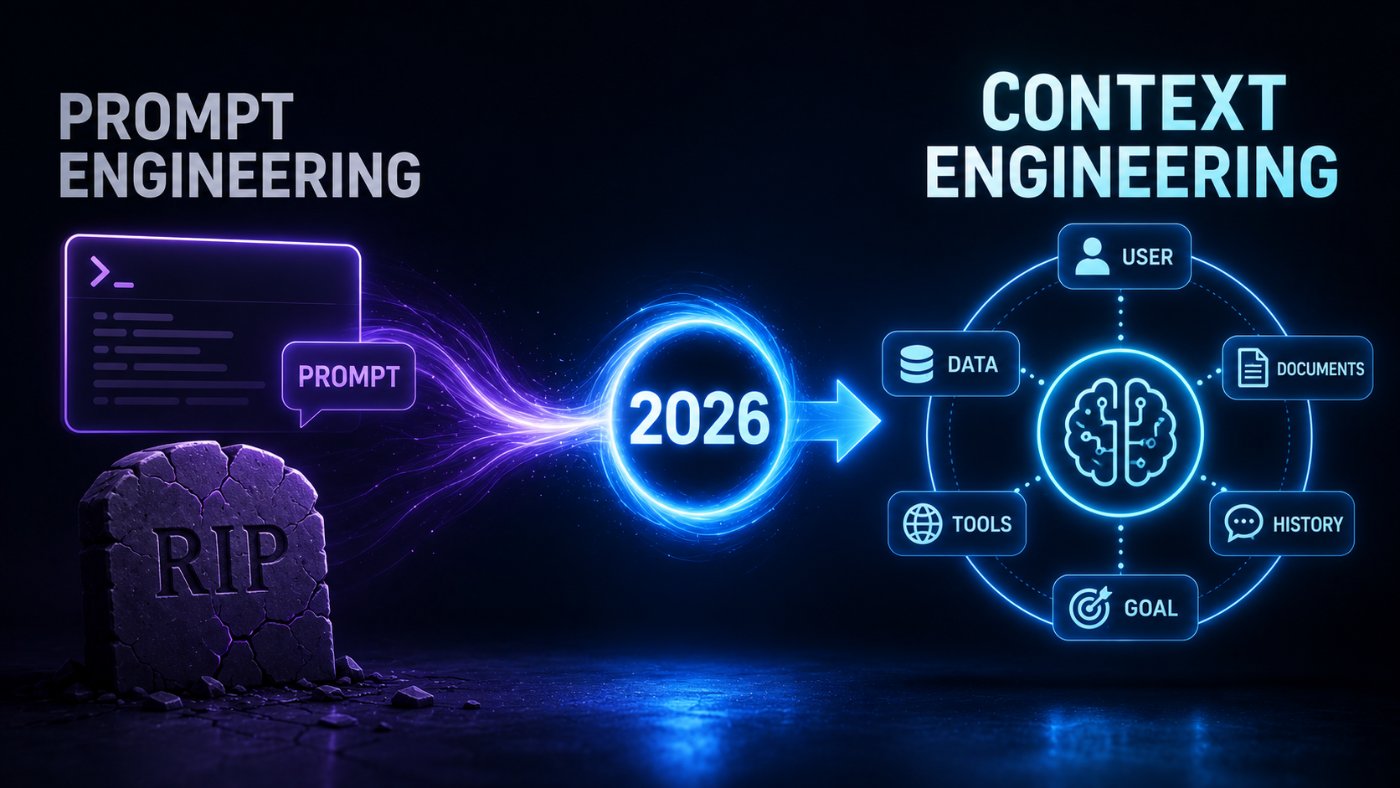
Prompt Engineering Isn't Dead, It Got Absorbed: Inside 2026's Shift to Context Engineering
82 percent of IT and data leaders now say prompt engineering alone can't power AI at scale. A 9,649-experiment study on file-native agents shows why the instruction is only 5 percent of what a model actually sees.

AIUC-1 Explained: Inside the AI Agent Security Certification Backed by Anthropic, IBM, and the Cloud Security Alliance
The Cloud Security Alliance added AIUC-1 to its STAR Registry on June 30, 2026, the same month NIST advanced its own federal AI Agent Standards Initiative. Here's how the world's first AI agent certification actually works.

Composite Abstention Architectures Cut AI Hallucination to Near Zero in Clinical and Legal Testing
New 2026 research combining structural validity gates with instruction-based abstention pushed hallucination rates as low as 2 percent in a clinical pilot, while legal AI hallucinations have now surfaced in 1,174 tracked court cases.