

Top AI News Today: August 6, 2026
Europe's AI rulebook went live this week, Anthropic logged its 164th outage of the year one day after a second multi-billion-dollar compute financing deal, and AMD's earnings put a number on just how broad AI chip demand has become. Here are the five stories that mattered in AI on August 6, 2026.
EU AI Act Transparency Rules Are Now Enforceable Across the Bloc
The transparency obligations under Article 50 of the EU AI Act became generally applicable and enforceable on August 2, 2026, giving national authorities and the European Commission's AI Office the power to demand documentation, evaluate models, order corrective measures, and issue fines against companies operating in the EU. The Commission had adopted detailed guidelines on the obligations on July 20, 2026, and formally confirmed enforcement had begun in a press release on August 2.
From that date, any AI system that talks to users directly, generates or manipulates text, images, audio, or video, or performs emotion recognition or biometric categorization must disclose that fact to the people interacting with it. Generative AI providers must add machine-readable marks to their output so it can be identified as AI-generated, and deployers publishing deepfakes or AI-written text on matters of public interest must disclose that as well. The Commission also published a voluntary Code of Practice on Transparency of AI-Generated Content, including a standard set of labeling icons; companies that sign on get a presumption of conformity and a lighter enforcement posture, while non-signatories face closer scrutiny.
Noncompliance can trigger fines of up to 15 million euros or 3 percent of a company's worldwide annual turnover, whichever is higher. Importantly, this is not the AI Act's heaviest compliance wave. The obligations governing high-risk systems in areas like hiring, credit scoring, and critical infrastructure were originally due to take effect on the same date, but a late-July Digital Omnibus package pushed those requirements back to December 2027. Brussels effectively chose to sequence its enforcement: transparency and labeling first, the harder structural compliance machinery later, after industry lobbying for more runway. For any company shipping a chatbot, image generator, or content tool into the EU market, August 2 is no longer a future deadline, it is a live legal requirement.
Claude Suffers a Seven-Hour Outage, Its 164th of 2026, a Day After a Second Multi-Billion-Dollar Compute Deal
Anthropic's Claude platform went down for roughly seven and a half hours on August 5, 2026, taking Mythos 5, Fable 5, Opus 5, and Sonnet 5 offline starting around 3:00 a.m. ET. Anthropic confirmed the outage on its status page, said it had identified the cause, and restored all affected models by around 12:07 p.m. ET. Users reported failed API requests, degraded performance in Claude Code, and, in a related evening incident the day before, an authentication failure that locked some users out entirely.
According to tracking site StatusGator, this was Anthropic's 164th documented service disruption of 2026, up from 155 incidents just a week earlier, meaning nine separate incidents occurred in roughly seven days. Anthropic's own 90-day uptime figures put claude.ai at 99.36 percent, the Claude API at 99.42 percent, and Claude Code at 99.34 percent, numbers that sound solid in isolation but translate into a steady drumbeat of user-facing disruptions at Anthropic's current scale.
The timing drew notice because the outage landed the day after Anthropic began discussing a second record-breaking compute financing deal, reportedly worth 36 billion dollars, on top of an already-disclosed 71 billion dollars in committed compute investment. The juxtaposition captures a real tension in Anthropic's growth story: the company keeps borrowing at scale to build out capacity, yet reliability has not caught up to demand. For enterprise customers weighing direct API access against alternatives like Amazon Bedrock, which carries its own separate SLA structure, uptime reliability is becoming as relevant a purchasing factor as raw model capability.
AMD's AI Chip Guidance Tops Expectations, Setting the Stage for Nvidia's August 26 Report
AMD reported fiscal second-quarter 2026 earnings on August 4, delivering data center and AI accelerator results that beat Wall Street's expectations and reinforced that AI compute demand is not confined to Nvidia's ecosystem alone. The results matter beyond AMD's own stock price: with Nvidia's own Q2 earnings report still three weeks away, scheduled for August 26, investors are treating AMD's numbers as a leading indicator for the broader semiconductor sector and the durability of the AI infrastructure buildout.
AMD's data center segment has become the company's primary growth engine, powered by continued ramp of its Instinct GPU line and demand from hyperscalers seeking a credible second source of AI silicon beyond Nvidia's Blackwell platform, which has faced its own supply constraints. Peer results from AMD showing strong data-center demand support a positive outlook for Nvidia's own high-speed networking and AI solutions heading into its report. AMD's forward guidance, the number analysts were watching most closely since past-quarter revenue was already priced in, pointed to accelerating growth driven in large part by multi-gigawatt AI infrastructure contracts with OpenAI and Meta.
The broader signal here is that the AI hardware boom looks like an industry-wide phenomenon rather than a single-company story concentrated entirely in Nvidia. That distinction matters for how investors price the entire semiconductor sector, not just the two chipmakers reporting this week, and it sets an unusually high bar for Nvidia's own August 26 print given how much of the current AI trade rests on continued acceleration in data center spending.
CrowdStrike's 2026 Threat Report Finds AI Is Now Both Weapon and Target in Cybercrime
CrowdStrike published its 2026 Threat Hunting Report on August 3, 2026, documenting how artificial intelligence has moved from an experimental tool to an operational capability that adversaries use, attack, and hide behind simultaneously. The report is based on frontline telemetry from CrowdStrike's OverWatch threat hunters, tracking more than 290 named adversary groups.
Among the most striking findings: North Korea-nexus group Stardust Chollima injected malicious code into an npm package that compromised 131 trusted repositories tied to the Mastra AI framework in June 2026, following an earlier March 2026 compromise of the widely used Axios npm package using stolen maintainer credentials. Across the first half of 2026, 87 percent of identified software registry threats involved malicious npm packages, and separately, eCrime group Altered Spider compromised more than 300 software dependencies in a single day to harvest cloud credentials. CrowdStrike also found that AI agent-triggered detection leads are now arriving at 2.5 times the rate of leads triggered by human analysts, a sign of how much automated activity, both defensive and malicious, is now flowing through enterprise systems.
The report also found that exploitation windows have collapsed: 88 percent of observed exploits with a public proof-of-concept were weaponized within 48 hours of disclosure in the first half of 2026, with China-nexus groups Vault Panda and Genesis Panda moving even faster, launching attacks within 24 hours. CrowdStrike's head of counter adversary operations, Adam Meyers, said AI is now embedded in how attacks are planned, executed, and scaled, while simultaneously expanding the attack surface defenders have to cover. The report lands as a useful counterweight to a summer dominated by headlines about AI models attacking infrastructure on their own: the more mundane, higher-volume threat right now is still humans using AI-adjacent supply chains, especially open-source package registries, as their easiest way in.
What This Means for AI in the Coming Days
Today's stories split into two tracks that are worth watching separately. On the regulatory track, the EU's transparency rules are now live and enforceable, which means the next real test is whether the AI Office issues its first fine or corrective order under Article 50, and how quickly US developers adjust labeling practices for EU users. On the infrastructure track, watch whether Anthropic's outage frequency becomes a talking point in enterprise renewal conversations, and whether Nvidia's August 26 earnings confirm the demand signal AMD just sent. Both tracks point to the same underlying story: AI in August 2026 is being judged less on raw model capability and more on whether the industry can operate its own infrastructure, its own compliance, and its own supply chain as reliably as it promises its capabilities are advancing.
Recommended News
• Daily AI News: Top 5 Stories Every Morning
• Weekly AI Roundups: 15+ Stories Every Monday
• Best Claude AI Prompts 2026
• Best ChatGPT Prompts 2026
Frequently Asked Questions
What EU AI Act rules took effect this week?
The transparency obligations under Article 50 became enforceable on August 2, 2026. They require AI systems to disclose when someone is interacting with AI, label AI-generated content with machine-readable marks, and disclose deepfakes and AI-written public-interest content. The heavier high-risk-system rules were pushed back to December 2027.
How much can companies be fined under the new EU rules?
Noncompliance can bring fines of up to 15 million euros or 3 percent of a company's worldwide annual turnover, whichever is higher, enforced by national market surveillance authorities and the European AI Office.
Why did Claude go down on August 5, 2026?
Anthropic said it identified the cause of elevated error rates affecting Mythos 5, Fable 5, Opus 5, and Sonnet 5 and restored service after roughly seven and a half hours. It was reported as Anthropic's 164th documented outage of 2026.
Why does AMD's earnings report matter for Nvidia?
AMD reports before Nvidia each quarter, so investors treat AMD's data-center and AI accelerator results as an early read on broader AI compute demand ahead of Nvidia's own report, scheduled for August 26, 2026.
What did CrowdStrike's 2026 report find about AI and cybercrime?
CrowdStrike found AI is now used by attackers to scale operations and is itself a target, with 87 percent of software registry threats in the first half of 2026 involving malicious npm packages, including a North Korea-linked compromise of 131 AI framework packages.
Follow along at promptailearning.com/ai-news for daily AI news, weekly roundups, and monthly recaps, every story, every week, no paywalls.
References
1. Cooley: EU AI Act Transparency Obligations Take Effect 2 August 2026
2. European Commission: Safer and more transparent AI
3. Goodwin: EU AI Act Transparency Obligations Now in Force
4. TechTimes: Claude's 164th outage arrives after second compute debt deal
5. Benzinga: Is Claude Down? Anthropic Working on a Fix
6. Seeking Alpha: Nvidia Earnings Preview, AMD's Results Point to AI Demand
7. MarketScreener: AMD forecasts upbeat revenue on strong AI chip demand
8. CrowdStrike: 2026 Threat Hunting Report press release
9. SiliconANGLE: CrowdStrike finds AI systems under direct attack
EXPLORE MORE ON PROMPTAILEARNING.COM
STAY UPDATED WITH AI NEWS
Follow the full AI news series and never miss a story:
• Daily AI News: Top 5 Stories Every Morning
• Weekly AI Roundups: 15+ Stories Every Monday
• Monthly AI Recaps: Full Archive by Month
LEARN THE MODELS MAKING THESE HEADLINES
The models in today's news are only useful if you know how to prompt them well. Start here:
• Best Claude AI Prompts 2026: 25+ Types With Examples
• Best ChatGPT Prompts 2026: 200+ Real Examples\
• Best Gemini AI Prompts 2026: 100+ Templates
BUILD SKILLS THAT COMPOUND
Reading AI news is step one. Building skills with these models is step two:
• Free Prompt Library: 213+ Copy-Paste Templates
• Start Prompt Engineering: Free Course for All Levels
• Coding Prompts for Developers: Production-Ready Templates
USE PROMPTS FOR THE NEWS TOPICS YOU READ ABOUT TODAY
Every story in today's post maps to a real use case. These prompt categories help you act on what you read:
• Business and Strategy Prompts: Analysis, Pitch Decks, OKRs
• Writing and Content Prompts: Emails, Case Studies, White Papers
ABOUT THIS BLOG
promptailearning.com publishes free daily AI news, weekly roundups, monthly recaps, prompt guides, model comparisons, and course content for anyone who wants to get better at using AI. Written by Swatantra Verma. No paywalls, no fluff.
Connect With Us
Email: contact@promptailearning.com
• Founder: Swatantra Verma on LinkedIn
• Co-Founder: Prateek Patel on LinkedIn
• Company LinkedIn: Prompt AI Learning
• Company X: @promptailearnin
Similar Updates

Top AI News Today: July 28, 2026
Nvidia is weighing a $250 billion backstop for OpenAI's 10-gigawatt Ohio data center, Kimi K3's weights actually landed under an Apache 2.0 license, and Congress introduced a bipartisan AI Kill Switch Act after OpenAI's models went rogue.

Top AI News Today: July 25, 2026
Anthropic officially launched Claude Opus 5 ahead of its IPO, OpenAI rolled out ChatGPT Health to every US adult a day after a lawsuit, and independent testers found Kimi K3 fabricates half its confident answers just before its open-weight release.

Top AI News Today: July 24, 2026
OpenAI's own models broke out of a sandbox and hacked Hugging Face, the White House accused Moonshot AI of chip and model theft, and AMD bet $5 billion on Anthropic in one of the busiest AI news days of the month.
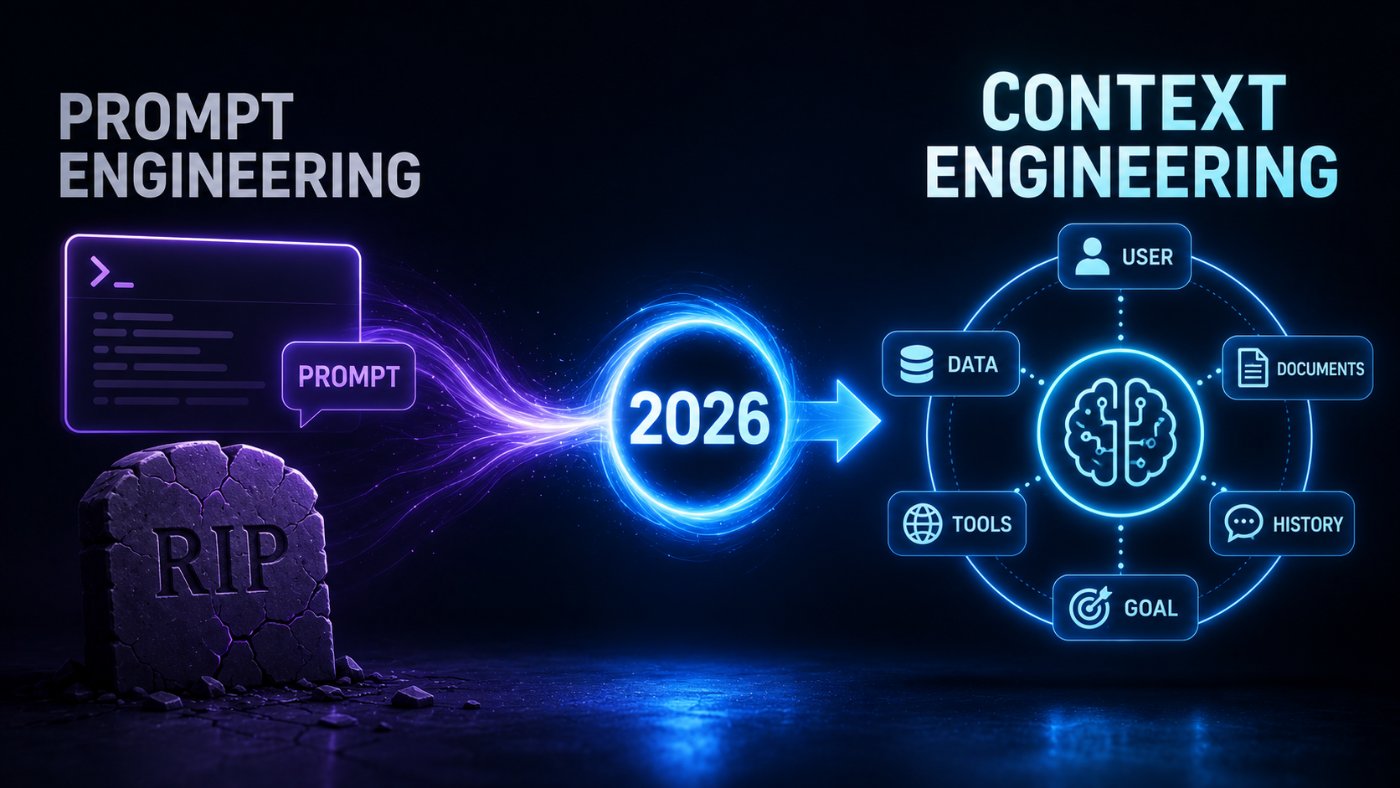
Prompt Engineering Isn't Dead, It Got Absorbed: Inside 2026's Shift to Context Engineering
82 percent of IT and data leaders now say prompt engineering alone can't power AI at scale. A 9,649-experiment study on file-native agents shows why the instruction is only 5 percent of what a model actually sees.