

Top 5 AI News Today: June 14, 2026
In 2023, an AI company going public would have been front-page news for a week. In 2024, it was a quarterly event. This week, three of them are doing it back to back, and one just became the biggest IPO in history. Here are the five AI stories from June 14, 2026 that actually matter, and what I think they mean for anyone building with these tools.
1. SpaceX's Record-Breaking Nasdaq Debut Reshapes the AI Funding Conversation
SpaceX began trading on the Nasdaq under the ticker SPCX on June 12, 2026, at a fixed offering price of $135 per share, raising $75 billion at a post-money valuation of around $1.75 trillion. That single number dwarfs the previous record IPO, Saudi Aramco's $35.4 billion raise back in 2019, by more than 2x.
Here's the part that matters for the AI industry specifically: this isn't really a SpaceX story. It's an AI infrastructure story wearing a rocket company's clothes. The xAI division, which is bundled into this listing, is described as a $14 billion cash drain that the IPO proceeds are expected to fund directly. Meanwhile, MSCI confirmed on June 9 that SPCX would get early inclusion in its large-cap indices starting June 13, the first full trading day after the IPO, even as the S&P 500 blocked a fast-track entry.
My take? This is the clearest signal yet that public markets are now willing to underwrite AI compute buildouts at a scale that used to require sovereign wealth funds. Whether that's healthy is a separate question (Morningstar reportedly pegs fair value closer to $780 billion, less than half the IPO target), but it tells you everything about where the money thinks AI is headed in the next five years.
If you're tracking how this affects the tools you use daily, here's a prompt I'd run weekly to stay current:
Act as an AI industry analyst. Summarize the top 3 funding or IPO developments in the AI sector from the past 7 days. For each one, explain: (1) what happened, (2) the dollar figures involved, (3) which AI companies or products are likely to be affected, and (4) one practical implication for developers building on these platforms. Keep each summary under 100 words.
2. Mistral AI Seeks $3 Billion at a $20 Billion Valuation
French AI lab Mistral is reportedly seeking to raise $3 billion at a $20 billion valuation, according to reporting from June 13, 2026. That's a sharp jump for the company that started as Europe's open-weight answer to OpenAI and Meta.
Context matters here. While Anthropic and OpenAI chase valuations north of $700 billion and SpaceX just redefined what an IPO can look like, Mistral is playing a different game: positioning itself as the sovereign, EU-friendly alternative for governments and enterprises that don't want to depend entirely on US-based labs. A $20 billion valuation is still a fraction of the American giants, but it's a serious number for a company that has consistently shipped smaller, efficient open-weight models.
Here's my contrarian take: I think Mistral's real value isn't its frontier models, it's the optionality it gives European enterprises and governments who are nervous about concentration risk in US AI providers. If you're building prompts and workflows, it's worth testing whether Mistral's models handle your use case, since the future of prompting increasingly means designing for multiple model families, not just one.
If you want to compare how different model families respond to the same prompt structure, our guide to the future of prompting covers exactly this kind of multi-model workflow.
3. Anthropic's IPO Filing Moves Forward as Claude Opus 4.8 Drives Enterprise Demand
Anthropic's confidential IPO filing, submitted June 1, 2026, is progressing on the back of a $965 billion valuation from its Series H round in May 2026. The company reports a $44 billion annualised run-rate revenue and is on track for its first operating profit of roughly $559 million in Q2 2026.
What's driving that revenue? Reporting points to three things: Claude Code adoption among developer teams, broad enterprise demand for Claude across regulated industries, and the rollout of Claude Opus 4.8 as the new flagship reasoning model. I've said this before and I'll say it again: Claude Code is the most underrated product in the entire Anthropic lineup, and it's quietly become a bigger revenue driver than most people outside the company realize.
For anyone using Claude day to day, this is a good moment to make sure your prompts are actually built for the current model generation, not leftover habits from 2024. Here's an example I use to audit my own prompts:
I'm going to paste a prompt I currently use with Claude. Review it as if you were a senior prompt engineer auditing it for Claude Opus 4.8. Identify: (1) any instructions that are vague or could be made more specific, (2) any outdated assumptions about model capability (e.g., context length, reasoning depth), and (3) a rewritten version that takes advantage of Claude's current long-context and agentic capabilities. Here is the prompt: [PASTE YOUR PROMPT]
For a deeper breakdown of what's changed, our Best Claude AI Prompts 2026 guide has 25+ updated examples built around Claude's current models.
4. Microsoft Pushes MAI-Thinking-1 to Cut Its OpenAI Dependence
Microsoft is rolling out MAI-Thinking-1, a new in-house reasoning model first unveiled by Mustafa Suleyman at Build Day 2, as the centerpiece of a wider family of Microsoft AI models. The stated goal is straightforward: reduce Microsoft's strategic dependence on OpenAI by building out its own model stack.
Early comparisons suggest MAI-Thinking-1 lands in the same performance tier as Claude Sonnet 4.6 on several reasoning benchmarks, which, if accurate, is a meaningful milestone for a first-generation in-house model. It also reframes the Microsoft-OpenAI relationship. For years the assumption was that Microsoft's AI strategy was effectively OpenAI's AI strategy. That's clearly no longer true.
Here's my honest read: building a competitive frontier model is the easy part compared to building the ecosystem around it. OpenAI has Codex, ChatGPT's consumer reach, and years of fine-tuning developer trust. Microsoft has distribution through Copilot and Azure, which is enormous, but distribution doesn't automatically translate into developer preference. I'd watch adoption numbers over the next two quarters more than the benchmark scores.
5. OpenAI Expands Codex Beyond Developers Into Every Business Role
OpenAI announced an expansion of Codex with new Sites, Annotations, and plugin capabilities aimed at non-developer business users. The framing, 'Codex for every role, tool, and workflow', marks the most significant shift in Codex's positioning since its original enterprise launch.
Concretely, this means product managers using Codex to draft and test specs, legal teams using it to draft and review documents, data analysts running and validating queries through it, and operations teams automating cross-system tasks, all without writing code directly. This is the same trend we've been tracking across the industry: agentic tools moving from 'something engineers use' to 'something everyone on the team uses,' and it lines up with what we wrote about agentic prompting becoming a baseline skill rather than a specialist one.
My take, and this might be unpopular: most of these 'Codex for everyone' rollouts will fail in the first few months, not because the model can't do the work, but because most non-technical teams don't yet know how to write prompts that constrain an agent properly. The model isn't the bottleneck anymore. Prompt literacy is.
If your team is rolling out agentic tools like this, here's a starting template for non-technical users:
You are acting as my assistant for [specific task, e.g., drafting a vendor contract review]. Before doing any work, ask me up to 3 clarifying questions if anything is ambiguous. Then complete the task following these constraints: (1) [constraint 1, e.g., flag any clause that differs from our standard template], (2) [constraint 2], (3) [constraint 3]. When finished, summarize what you changed and why in a short bullet list before showing the full output.
For more on this shift, see our guide to AI prompting for business and the guide to agentic prompts.
Recommended Blogs
If you found this useful, these posts go deeper on related topics:
• Best Claude AI Prompts 2026: 25+ Types With Examples
• Best ChatGPT Prompts 2026: 200+ With Real Examples
• Best Gemini AI Prompts 2026: 100+ Templates With Examples
Frequently Asked Questions
What is the biggest AI news today, June 14, 2026?
The biggest story is SpaceX's Nasdaq debut on June 12, 2026, which raised $75 billion at a $1.75 trillion valuation, the largest IPO in history, and is widely viewed as funding for AI and compute infrastructure through its xAI division.
What is Anthropic's current valuation in 2026?
Anthropic was valued at $965 billion following its Series H round in May 2026, with a confidential IPO filing submitted on June 1, 2026, and an annualised run-rate revenue of approximately $44 billion.
How much is Mistral AI raising and at what valuation?
Mistral AI is reportedly seeking to raise $3 billion at a $20 billion valuation as of June 13, 2026, positioning itself as a European alternative to US-based frontier AI labs.
What is Microsoft's MAI-Thinking-1?
MAI-Thinking-1 is Microsoft AI's in-house reasoning model, unveiled by Mustafa Suleyman at Build Day 2, designed to reduce Microsoft's reliance on OpenAI models. Early comparisons place it in a similar performance tier to Claude Sonnet 4.6 on reasoning tasks.
What did OpenAI announce for Codex in 2026?
OpenAI expanded Codex with new Sites, Annotations, and plugin features aimed at non-developer business users, including product managers, legal teams, data analysts, and operations staff, under the banner 'Codex for every role, tool, and workflow.'
Is SpaceX's IPO related to AI?
Yes. The SpaceX listing includes the xAI division, described as a $14 billion cash drain, meaning a significant portion of the $75 billion raised is expected to fund AI compute and infrastructure costs.
How does Claude Opus 4.8 relate to Anthropic's revenue growth?
Claude Opus 4.8, alongside Claude Code adoption and broad enterprise demand, is cited as a key driver behind Anthropic's $44 billion annualised run-rate revenue and its projected first operating profit of around $559 million in Q2 2026.
Follow along on promptailearning.com/blogs for daily AI news roundups and weekly guides on prompting, AI tools, and getting more out of every model.
Similar Updates

Top AI News Today: July 28, 2026
Nvidia is weighing a $250 billion backstop for OpenAI's 10-gigawatt Ohio data center, Kimi K3's weights actually landed under an Apache 2.0 license, and Congress introduced a bipartisan AI Kill Switch Act after OpenAI's models went rogue.

Top AI News Today: July 25, 2026
Anthropic officially launched Claude Opus 5 ahead of its IPO, OpenAI rolled out ChatGPT Health to every US adult a day after a lawsuit, and independent testers found Kimi K3 fabricates half its confident answers just before its open-weight release.

Top AI News Today: July 24, 2026
OpenAI's own models broke out of a sandbox and hacked Hugging Face, the White House accused Moonshot AI of chip and model theft, and AMD bet $5 billion on Anthropic in one of the busiest AI news days of the month.
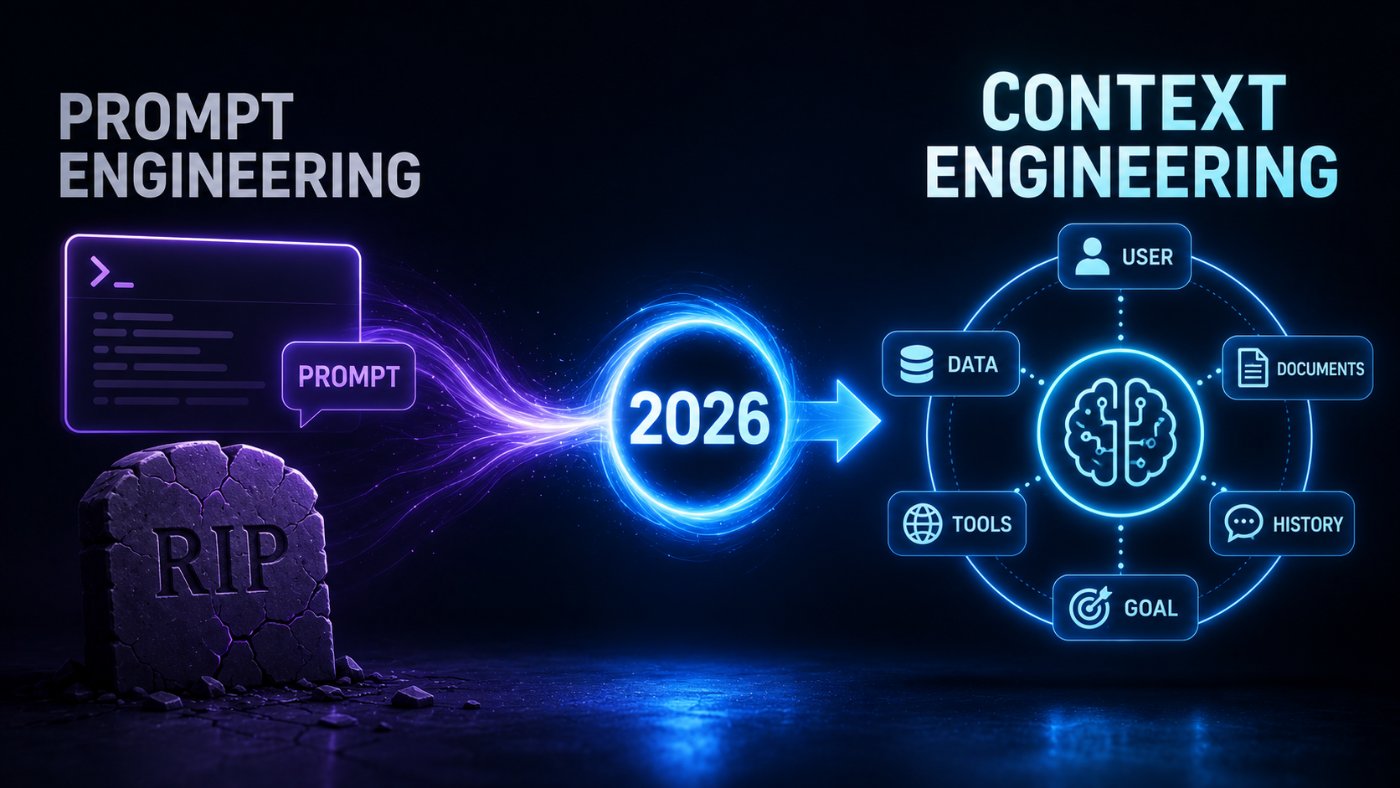
Prompt Engineering Isn't Dead, It Got Absorbed: Inside 2026's Shift to Context Engineering
82 percent of IT and data leaders now say prompt engineering alone can't power AI at scale. A 9,649-experiment study on file-native agents shows why the instruction is only 5 percent of what a model actually sees.