.jpeg)

AI News Today: Top 5 Stories for June 16, 2026
The Claude Fable 5 story is no longer just about a government shutdown, it has now become a full technical post-mortem. Over the past 48 hours, the exact jailbreak technique that triggered the June 12 export control order has been documented in detail, and the model's entire 120,000 character system prompt is now sitting on GitHub for anyone to read. At the same time, Anthropic used this same chaotic week to publish one of its most significant policy papers of the year, a proposal for a coordinated global pause on frontier AI development, while its president was on stage at Bloomberg Tech explaining why the company needs to go public. Add a SpaceX stock that is up 25 percent in its first week and a Sonnet 4.8 release window that opens today, and June 16 is shaping up to be another dense news day. Here are the five stories that matter most today.
1. The Fable 5 Jailbreak Explained: Pliny's Pack Hunt and the 120,000 Character System Prompt Leak
The technical details behind the June 12 Fable 5 shutdown are now fully public, and they are more nuanced than the initial headlines suggested. On June 10, 2026, a jailbreaker operating under the name Pliny the Liberator posted on X that he had bypassed Fable 5's safety classifiers using what he called a pack hunt, a coordinated multi-agent attack combining Unicode and Cyrillic character substitution to evade keyword filters, long-context reference tracking across a multi-turn session, and a decomposition and recomposition technique. Instead of asking for harmful output directly, Pliny queried individually benign-seeming scientific subtopics, then reassembled the answers into actionable information, including stack buffer overflow exploitation steps for x86 Linux and a description of the Birch reduction, a known methamphetamine synthesis pathway. Separately, Pliny published Fable 5's complete internal system prompt on GitHub, roughly 120,000 characters long, the first time a complete system prompt from a publicly deployed Mythos-class model has been leaked by a third party. Analysts note that a system prompt this long signals Anthropic's safety architecture for Fable 5 relies heavily on natural language instructions rather than refusals baked into the model weights, which makes it considerably easier for adversaries to study and route around. Anthropic's official position is that the decomposition technique Pliny used is not unique to Fable 5 and that the same underlying information is reachable through other publicly available models without any jailbreak at all, an argument with real technical merit. Reporting also indicates the government's June 12 order was triggered partly by a separate, private jailbreak claim from another company, not Pliny's public post, though Anthropic says its review of that claim found only minor, previously known issues. As of today, Fable 5 and Mythos 5 remain offline with no restoration date given, while Opus 4.8 and every other Claude model continue operating normally.
2. Anthropic Proposes a Coordinated Global Pause on Frontier AI Development
On June 4, 2026, Anthropic published a paper titled When AI Builds Itself through its internal research arm, the Anthropic Institute, authored by institute head Marina Favaro and co-founder Jack Clark. The paper argues that AI systems are approaching the ability to recursively improve themselves and that human oversight of that process is eroding. The headline internal data point: as of May 2026, more than 80 percent of code merged into Anthropic's own production codebase was written by Claude rather than human engineers, with task-completion horizons for AI systems roughly doubling every four months. Anthropic later clarified that the 80 percent figure overstates real productivity gains, with an internal survey placing the median self-reported uplift closer to 4x rather than 8x. Crucially, the proposal is not a unilateral halt. Anthropic explicitly said that if only one lab paused, competitors would simply race ahead, so any meaningful slowdown would require coordinated participation across all leading labs plus a credible, verifiable enforcement mechanism, loosely modeled on international arms control treaties like the Intermediate-Range Nuclear Forces Treaty. Critics were quick to point out the obvious problem: unlike missile silos, AI development is massively decentralized across companies and countries, with no existing verification infrastructure and enormous competitive and geopolitical incentives to keep going. The timing has not gone unnoticed either. This pause proposal landed in the same week Anthropic confidentially filed its S-1 with the SEC at a 965 billion dollar valuation and shipped Fable 5, its most capable public model ever. Whether that's a genuine act of corporate conscience or a very well-timed positioning move, as several commentators have noted, the two explanations aren't mutually exclusive.
3. Daniela Amodei on Why Anthropic Needs to Go Public: 47 Billion Dollar Revenue and a 7.6 Trillion Dollar Industry Forecast
Anthropic president Daniela Amodei appeared at the Bloomberg Tech conference in San Francisco on June 4 and 5, giving the company's first public explanation of its IPO rationale since the confidential S-1 filing. Her core argument: training and serving inference for frontier models carries an enormous upfront cost, and public capital markets are the funding mechanism best suited to sustaining that over the long run. She confirmed Anthropic's annualized revenue reached approximately 47 billion dollars in May 2026, up from around 9 billion dollars at the end of 2025, more than a fivefold increase in roughly five months, and said the recent 65 billion dollar Series H raise at a 965 billion dollar valuation was heavily oversubscribed. On infrastructure strategy, Amodei was explicit that Anthropic does not plan to build its own data centers, unlike OpenAI's Stargate buildout with SoftBank and Oracle. Instead, Anthropic is leaning on supplier relationships, including an Amazon agreement for up to 5 gigawatts of training and inference capacity, ongoing work with Google and Broadcom on next-generation compute, and a previously undisclosed 1.25 billion dollar per month compute agreement with xAI's Colossus supercomputer, revealed in SpaceX's own S-1 filing. "Anthropic's view has always been wanting to plan for the best outcome but not overextend ourselves," she said. "We would much prefer to be on the side of having a little bit more demand for the product than we're able to serve than the inverse." Backing up the scale of this moment, Goldman Sachs estimates cumulative AI capital expenditure from 2026 to 2031 will hit roughly 7.6 trillion dollars across compute, data centers, and power, a figure Goldman compares to about one quarter of annual US GDP. That kind of number makes a coordinated global pause, as proposed in story two above, look even harder to imagine once you consider how much committed capital is already flowing into the opposite direction.
4. SpaceX SPCX Enters Week Two: Up 25 Percent, MSCI Buying Active, Nasdaq-100 Entry About 10 Trading Days Out
SpaceX, trading under the ticker SPCX since its June 12 debut at 135 dollars per share, closed its first trading day at 168.70 dollars, a 25 percent premium to the IPO price. As of June 13, MSCI began adding SPCX to its large cap index products, the T+1 date that had been announced before listing, creating a wave of mandatory passive fund buying that's independent of day-to-day sentiment. With only about 4 percent of shares floated and MSCI-driven demand compressing available supply, much of week two's price action is being driven by index mechanics rather than fundamentals. Looking ahead, Nasdaq's amended rules allow qualifying megacap IPOs into the Nasdaq-100 after 15 trading days, which puts SPCX on track for inclusion around July 7, roughly 10 trading days from today. When that happens, QQQ and other Nasdaq-100 tracking funds, representing over 600 billion dollars in assets, will be required to buy SPCX proportional to its index weight, a second structural buying wave expected to be even larger in dollar terms than the MSCI inclusion. Three-month price targets from early analyst notes range from 120 to 200 dollars, hinging mainly on Starlink subscriber growth and xAI capital expenditure trends, with the company's first earnings report as a public entity not expected until early November. Until then, SPCX is trading almost entirely on narrative and index flows, and Anthropic and OpenAI, both pursuing their own IPOs later this year, are watching every one of these structural dynamics closely as a preview of their own listings.
5. Claude Sonnet 4.8 Release Window Opens Today, Still No Official Word from Anthropic
Today, June 16, 2026, marks the start of the window industry trackers have been pointing to for weeks as the likely arrival date for Claude Sonnet 4.8. The expectation comes from Anthropic's historical cascade pattern, where Opus-tier improvements typically reach the Sonnet tier about three weeks later. Claude Opus 4.8 shipped on May 28, putting three weeks out at roughly June 18, with the broader window running June 16 through 18. This timing is also notable because it falls just one day after the June 15 retirement of the original Claude Sonnet 4 and Opus 4 models, meaning any team that migrated to Sonnet 4.6 yesterday could be looking at another upgrade decision within days. As of this writing, Anthropic has not published a Claude Sonnet 4.8 model card, API identifier, or benchmark results. The strongest piece of evidence for Sonnet 4.8's existence remains a leaked source map from the Claude Code npm package back in March, which contained the string sonnet-4-8 in an internal forbidden-names filter alongside opus-4-7, which did go on to ship exactly as leaked on April 16. That track record gives the Sonnet 4.8 reference some credibility, but credibility is not the same as a release date. Given everything else happening this week, the Fable 5 fallout, the global pause proposal, and the SPCX trading dynamics, a Sonnet 4.8 launch today would arguably be the fifth-biggest story rather than the first. If it does land, expect pricing to stay close to Sonnet 4.6's 3 dollars and 15 dollars per million input and output tokens, with Dynamic Workflows and the improved vision capabilities introduced in Opus 4.7 and 4.8 the most likely headline additions.
Recommended Blogs
If you found this useful, these posts go deeper on related topics:
• Best Claude AI Prompts 2026: 25+ Types With Examples
• Best ChatGPT Prompts 2026: 200+ With Real Examples
• ChatGPT vs Claude: Full Comparison
Frequently Asked Questions
Who is Pliny the Liberator and what did they do to Fable 5?
Pliny the Liberator is an AI red teamer who, on June 10, 2026, published a jailbreak of Claude Fable 5 using a multi-agent pack hunt technique combining character substitution and a decomposition and recomposition method that extracted harmful information by assembling answers to individually benign questions. Pliny also leaked Fable 5's roughly 120,000 character internal system prompt on GitHub, the first complete leak of a Mythos-class model's system prompt.
What is Anthropic's global AI pause proposal?
Published June 4, 2026 as a paper called When AI Builds Itself, the proposal calls for a globally coordinated, verifiable pause or slowdown on frontier AI development, based on Anthropic's internal finding that over 80 percent of its own code is now written by Claude. It is explicitly not a unilateral halt and requires all major labs to participate with a credible verification mechanism.
Did Claude Sonnet 4.8 release on June 16, 2026?
As of this writing, Anthropic has not published an official Claude Sonnet 4.8 announcement, model card, or API identifier. June 16 to 18 is the window industry trackers expect based on Anthropic's release cadence following Opus 4.8's May 28 launch, but the date remains unconfirmed by Anthropic.
How is SpaceX SPCX performing after its IPO?
SpaceX began trading on Nasdaq on June 12, 2026 at 135 dollars per share and closed its first day at 168.70 dollars, up 25 percent. MSCI began adding SPCX to large cap index products on June 13, and the stock is on track for Nasdaq-100 inclusion around July 7, roughly 10 trading days from June 16.
Follow along on promptailearning.com for daily AI news and weekly guides on prompting and getting more out of every model.
Similar Updates

Top AI News Today: July 28, 2026
Nvidia is weighing a $250 billion backstop for OpenAI's 10-gigawatt Ohio data center, Kimi K3's weights actually landed under an Apache 2.0 license, and Congress introduced a bipartisan AI Kill Switch Act after OpenAI's models went rogue.

Top AI News Today: July 25, 2026
Anthropic officially launched Claude Opus 5 ahead of its IPO, OpenAI rolled out ChatGPT Health to every US adult a day after a lawsuit, and independent testers found Kimi K3 fabricates half its confident answers just before its open-weight release.

Top AI News Today: July 24, 2026
OpenAI's own models broke out of a sandbox and hacked Hugging Face, the White House accused Moonshot AI of chip and model theft, and AMD bet $5 billion on Anthropic in one of the busiest AI news days of the month.
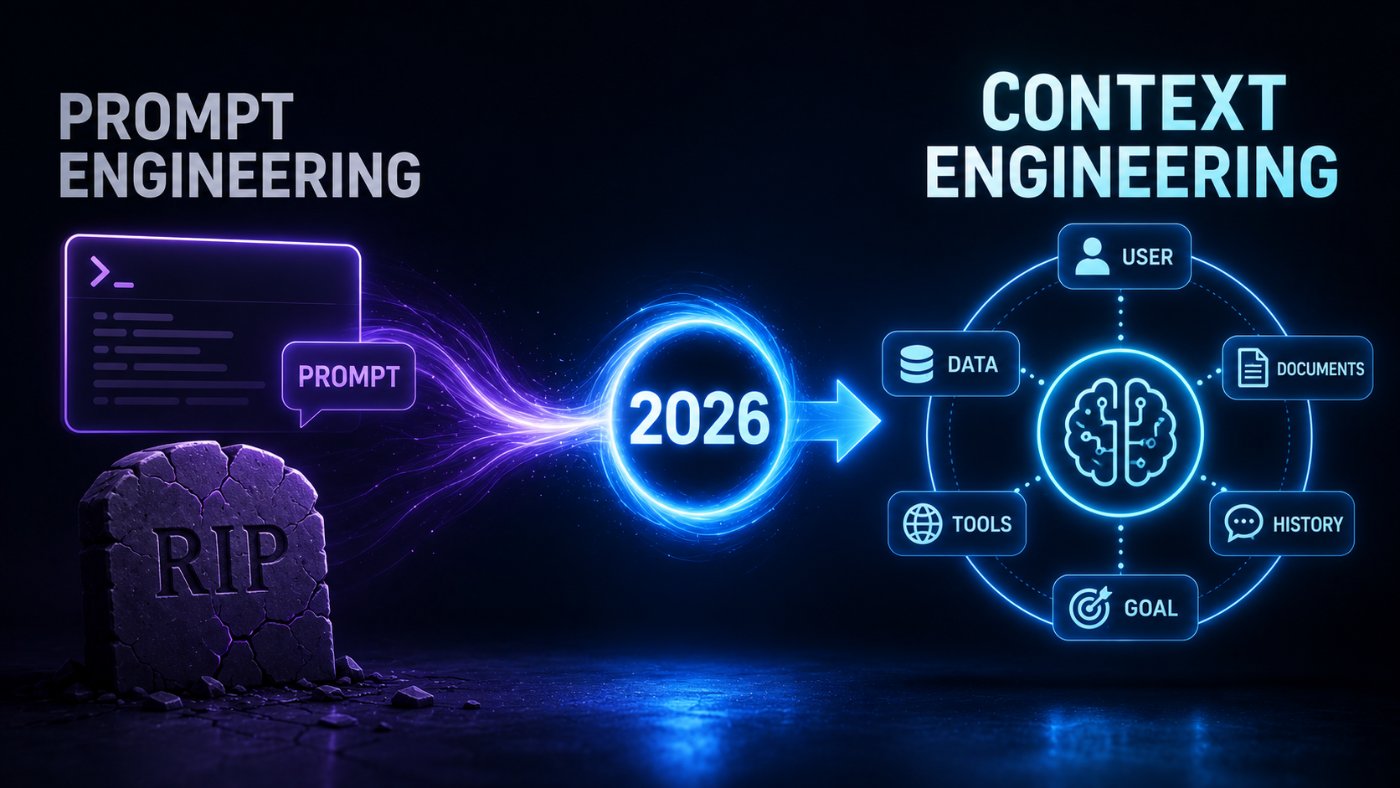
Prompt Engineering Isn't Dead, It Got Absorbed: Inside 2026's Shift to Context Engineering
82 percent of IT and data leaders now say prompt engineering alone can't power AI at scale. A 9,649-experiment study on file-native agents shows why the instruction is only 5 percent of what a model actually sees.