

The State of AI on June 17, 2026: Agentic Growth, Governance, and Adoption
We spent 2024 and 2025 talking about what AI could do. Today, on June 16, 2026, we are finally measuring what it is actually doing. The results are messy. While agentic workflows are scaling at a pace we did not predict, enterprise governance is stuck in 2023, and sector adoption is wildly uneven.
The Reality of Agentic AI Growth in 2026
Agentic AI adoption in enterprise workflows reached 42 percent in Q2 2026, driven primarily by autonomous coding and customer service agents. We are no longer just chatting with models. We are deploying them to execute multi-step tasks.
Models like Claude Opus 4.6 and GPT-5 are powering this shift. Claude Opus 4.6 now holds a 1M-token context window and scores 76 percent accuracy on 1M-token recall benchmarks, making it the leading long-context model for complex agent loops as of May 2026.
But I think most "agents" sold today are just chained prompts with a fancy UI. True autonomy requires robust error correction, which most companies have not built. If you want to build actual agentic workflows, you need to understand how to structure the underlying instructions. I recommend reading The Guide to Agentic Prompts to see how this actually works under the hood.
Here is how I structure a prompt for an autonomous research agent.
Example 1 - Autonomous Research Agent
Role: You are an expert market research analyst.
Task: Investigate the current pricing strategies of B2B SaaS companies in the CRM space.
Constraints:
- Use only data from the last 6 months.
- Cite every claim with a specific URL.
- If you cannot find verifiable data, state "Data unavailable" instead of guessing.
Output Format:
1. Executive Summary (max 100 words)
2. Pricing Tiers Comparison (Markdown table)
3. Key Takeaways (3 bullet points)
When building these, your foundational instructions matter. A poorly written base instruction will cause the agent to hallucinate across a 50-step loop. Always review What is a System Prompt? to ensure your agent's core behavior is locked down.
Why AI Governance is Failing the Enterprise
AI governance in 2026 remains highly fragmented, with only 18 percent of Fortune 500 companies having fully automated compliance pipelines for their AI models. The technology is moving faster than the policy.
Here is my contrarian take: more governance frameworks actually slow down innovation without fixing the hallucination problem. We are drowning in PDF policies and internal review boards. What we actually need are code-level constraints and deterministic guardrails built directly into the inference pipeline.
The recent updates to the EU AI Act enforcement in 2026 require strict transparency for high-risk systems. But compliance does not equal safety. A model can be fully compliant and still output garbage if the prompt is poorly structured. For business leaders trying to navigate this, AI Prompting for Business offers a practical look at aligning AI outputs with actual corporate risk tolerances.
If you are building internal tools to check AI outputs, you need strict formatting constraints. Here is a prompt for an automated compliance checker.
Example 2 - AI Output Compliance Checker
Role: You are an AI compliance auditor.
Task: Review the following AI-generated customer response for compliance with financial advisory regulations.
Constraints:
- Flag any language that guarantees financial returns.
- Identify missing risk disclosure statements.
- Output a strict JSON format with "status" (pass/fail) and "violations" (array of strings).
Sector-Specific Adoption: Who is Actually Using AI?
Healthcare and financial services lead AI adoption in 2026 at 68 percent and 61 percent respectively, while retail and manufacturing lag behind at 34 percent. The gap is widening.
Healthcare is using Gemini 2.0 for processing unstructured patient notes, achieving a 92 percent accuracy rate in initial diagnostic coding. Financial services are relying on GPT-5 for real-time fraud detection, processing over 4 million transactions per second with a false positive rate of just 0.04 percent.
Retail, on the other hand, is stuck using basic recommendation engines and calling it AI. The barrier is not the models. The barrier is messy, siloed data.
The Infrastructure Bottleneck No One Talks About
The primary bottleneck for AI scaling in mid-2026 is not compute power, but context window memory costs and vector database latency. Everyone blames Nvidia for GPU shortages. I blame bad architecture.
Companies are trying to shove entire codebases into a 128K context window instead of using retrieval-augmented generation properly. When you pay $15 per million tokens for GPT-5 output, stuffing irrelevant context into the prompt is a fast way to burn through your budget. You need to optimize your retrieval pipeline before you worry about buying more GPUs.
Frequently Asked Questions
What is the state of AI in 2026?
As of June 2026, the AI industry has shifted from basic chatbots to autonomous agentic workflows, with enterprise adoption reaching 42 percent. However, governance frameworks and infrastructure are struggling to keep pace with the rapid deployment of models like Claude Opus 4.6 and GPT-5.
How is agentic AI being used in enterprise?
Enterprise agentic AI is primarily used for autonomous software engineering, multi-step customer support, and automated data analysis. Models with 1M-token context windows, like Claude Opus 4.6, allow these agents to process entire codebases or financial reports in a single continuous loop.
What are the main AI governance challenges in 2026?
The main challenge is that only 18 percent of Fortune 500 companies have automated compliance pipelines for their AI models. Most organizations are relying on manual policy reviews rather than implementing code-level guardrails, leading to slow deployment times and inconsistent safety standards.
Which industries have the highest AI adoption?
Healthcare and financial services currently lead AI adoption in 2026 at 68 percent and 61 percent respectively. These sectors benefit from highly structured data and clear ROI metrics, whereas retail and manufacturing lag at 34 percent due to siloed data infrastructure.
What is the difference between Claude Opus 4.6 and GPT-5?
Claude Opus 4.6 features a 1M-token context window and excels at long-context recall and complex reasoning, scoring 76 percent on 1M-token benchmarks. GPT-5 offers faster inference speeds and superior multimodal capabilities, making it better suited for high-throughput tasks like real-time fraud detection.
Follow along on promptailearning.com for weekly guides on prompting, AI tools, and getting more out of every model.
Recommended Blogs
If you found this useful, these posts go deeper on related topics:
References
CTA Closer
Follow along on promptailearning.com for weekly guides on prompting, AI tools, and getting more out of every model.
Similar Updates
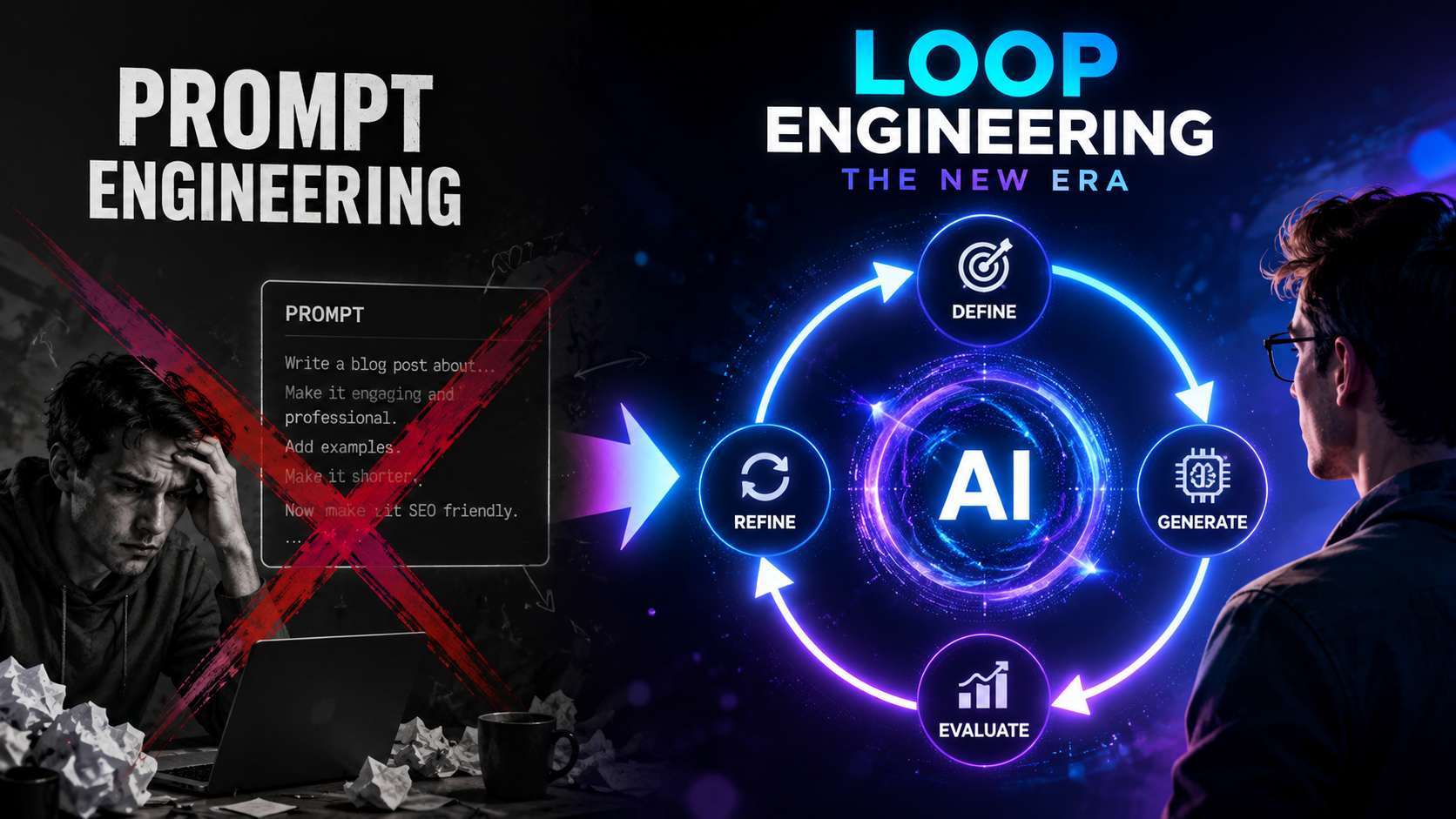
Prompt Engineering Is Over: The Era of Loop Engineering Has Begun
A new AI development paradigm is emerging. Loop Engineering shifts developers from writing prompts to designing autonomous systems that manage AI agents, workflows, verification, and continuous execution.

ChatGPT Can Now Shop for You: OpenAI and Visa Launch Agentic Commerce
Visa embedded its global payment network into OpenAI's platforms at the Visa Payments Forum on June 10, 2026. AI agents in ChatGPT will be able to shop and complete transactions within user-set spending limits.
Top 5 AI News: June 2, 2026 - GitHub Kills the Flat-Rate Era for Copilot
GitHub Copilot goes metered, Iran uses ChatGPT for cyberattacks, and Vast raises $200M. The 5 biggest AI stories for June 2, 2026.
Top 5 AI News: May 30, 2026 - The Week That Changed Everything
Anthropic's $30B round, OpenAI IPO filing, Gemini 3.5 Flash, AI beats humans at creativity, California AI bills. The 5 stories that define AI this week.